




Servo motors and servo drives – how servo systems work
A servo system moves a load to the right position, at the right speed and at the right time – over and over again. Here is how motor, servo drive and encoder work together, how to size an axis and when servo is the right choice.
 By Erik Ahlqvist, Managing Director of SCN · Updated 24 October 2026 · 7 min read
- Servo system – servo motor, servo drive and encoder, controlled by a motion controller or PLC.
- Closed loop – the drive constantly compares the command with the actual position and corrects the error, thousands of times per second.
- Servo or VFD – servo for fast, precise positioning. A VFD for speed control of pumps, fans and conveyors.
- Sizing – check peak torque, RMS torque, speed and inertia ratio.
- Communication and safety – EtherCAT, MECHATROLINK or PROFINET to the control system, and STO or SS1 for a safe stop.
What is a servo system?
In a servo system, the motor follows a command for position, speed or torque, and an encoder constantly reports where the axis actually is. The system consists of:
- Servo motor – usually a low-inertia permanent magnet synchronous motor, built for fast acceleration and high short-term overload.
- Servo drive – also called a servo amplifier, and SERVOPACK at Yaskawa. It powers the motor and controls position, speed and torque.
- Feedback – an incremental encoder, absolute encoder or resolver on the motor shaft. Modern servo motors often have encoders with 20 bits or more per revolution.
- Motion control – a PLC or motion controller that calculates the path and sends commands to the drives.
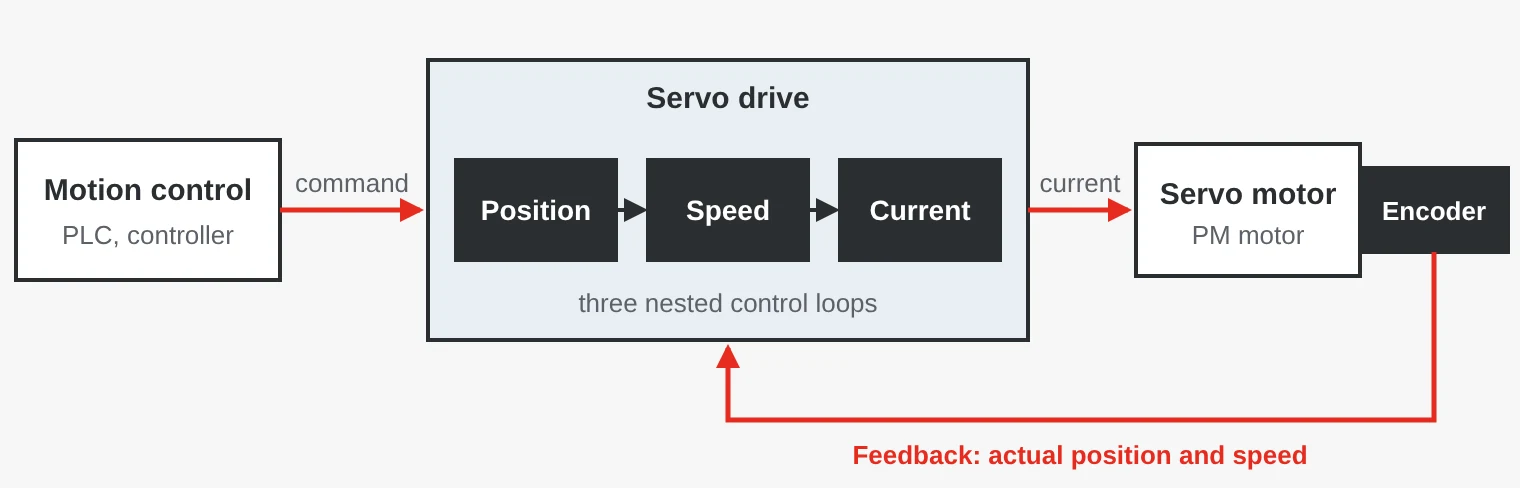
The drive uses three nested loops, known as cascade control. The inner loop controls current and therefore torque, the next controls speed and the outer loop controls position. The faster the loops, the faster and more stable the axis.
Servo, VFD or stepper motor?
| Servo | VFD | Stepper motor | |
|---|---|---|---|
| Control | Closed loop, always with encoder | Usually without encoder | Usually open loop, counts steps |
| Strength | Fast, precise positioning and high dynamics | Speed control and energy saving | Simple, low-cost positioning |
| Torque | High peak torque, even at high speed | Even torque up to rated speed | Drops sharply with speed |
| Weakness | Needs tuning | Limited dynamics | Can lose steps unnoticed |
| Examples | Packaging, robots, CNC | Pumps, fans, conveyors | Small axes and dosing units |
The boundaries have blurred. Some VFDs can position with an encoder, and closed-loop stepper motors exist. But when several axes must move in sync, with short cycle times and high accuracy, servo is almost always the right choice.
Rotary, linear and direct drive motors
- Rotary servo motors – the usual choice, connected to the load through a gearbox, ball screw, toothed belt or rack. Available with low inertia for fast axes, medium inertia for heavier loads and with a holding brake for vertical axes.
- Linear motors – a flat, straight motor that drives the carriage directly. Without a ball screw or belt, there is no backlash and no wear in the transmission.
- Direct drive motors (torque motors) – drive a rotary table or shaft directly, with no gearbox. High torque, high stiffness and no backlash.
An incremental encoder needs a homing run after a power failure. An absolute encoder knows the position as soon as power returns, and multi-turn encoders also count revolutions, with or without a battery. In robots, presses and axes where homing is awkward, absolute encoders are standard.
How to size a servo axis
Start with the motion, not the motor: distance, time, dwell and load. Then check four things:
- Peak torque during acceleration, including friction and external forces. It must be below the motor maximum torque, which is often about three times rated torque.
- RMS torque over the whole cycle. It determines heating and must be below rated torque.
- Speed – the highest speed in the motion must be below the motor maximum speed, with margin.
- Inertia ratio – the load inertia referred to the motor shaft, compared with the motor inertia.
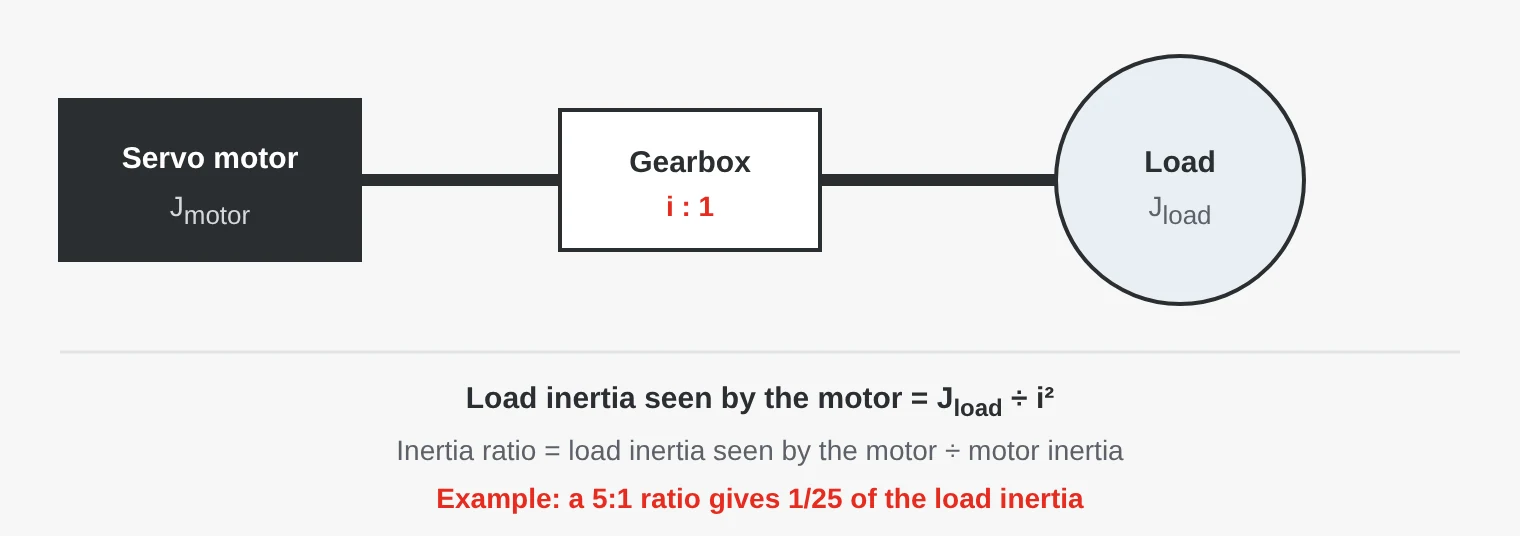
A common rule of thumb is to keep the inertia ratio below about 10:1, and lower for highly dynamic axes. Drives with vibration suppression can handle more, but with less margin. A gearbox reduces the load inertia seen by the motor by the square of the ratio.
- Choosing the motor by power. Peak torque, RMS torque and inertia ratio decide, not kW.
- Mechanics that are too flexible. Long belts, gearbox backlash and weak mountings make the axis oscillate, however good the drive.
- Using the holding brake to stop. The brake is for holding the load at standstill. Used to stop a moving load, it wears quickly.
- Poor cabling. Motor and encoder cables must be shielded, routed away from signal cables and rated for cable chains if the axis moves.
Control and safety functions
Analogue ±10 V and pulse train control have largely given way to deterministic networks, where the motion controller synchronises many axes with cycle times below one millisecond:
- EtherCAT – open and widespread. The CiA 402 drive profile makes it easier to mix brands, and safety signals can share the network with FSoE (Safety over EtherCAT).
- MECHATROLINK-III – the motion network developed by Yaskawa, easy to configure with Yaskawa controllers.
- PROFINET – common in Siemens environments, with the PROFIdrive profile and PROFIsafe for safety functions.
Motion is often programmed with PLCopen Motion Control function blocks in IEC 61131-3, for example for electronic cams, electronic gearing and flying shears.
Safety functions for drives are defined in IEC 61800-5-2. STO (Safe Torque Off) removes torque immediately and corresponds to stop category 0 in IEC 60204-1. SS1 (Safe Stop 1) decelerates the motor in a controlled way and then activates STO, corresponding to stop category 1. Safety modules add SBC for safe holding brake control and SLS for safely limited speed during setup and troubleshooting. The required level, PL to ISO 13849-1 or SIL to IEC 62061, follows from the machine risk assessment.
Where are servo systems used?
- Packaging and food – flow wrappers, labelling, filling and pick-and-place with several synchronised axes.
- Robots and handling – industrial robots, gantry robots and automated guided vehicles (AGVs).
- Machine tools – feed axes in CNC milling machines, lathes and laser cutters.
- Presses and sheet metal – servo presses with a programmable stroke profile and sheet metal feeders.
- Semiconductors and electronics – wafer handling, component placement and inspection with linear and direct drive motors.
- Medical and laboratory – sample handling and pipetting robots.
Servo systems from SCN
We offer servo systems from Yaskawa: servo motors and servo drives in the Sigma-7 and Sigma-X series, linear motors, direct drive motors and motion controllers for up to 64 axes. Tell us about the motion, the load and the control system, and we will help you size the axis.
Examples from our range
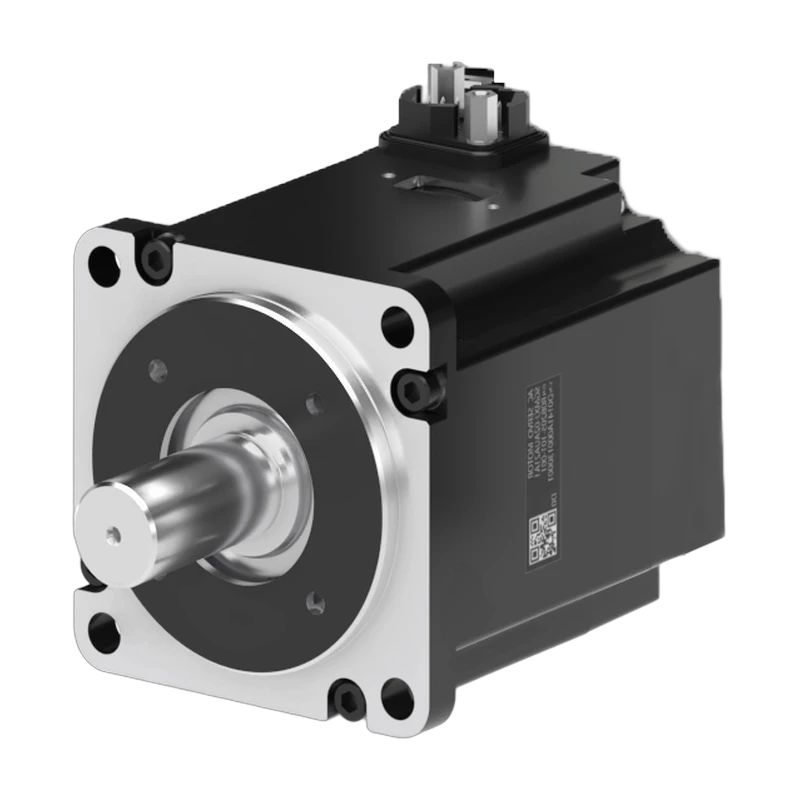 YaskawaSGMXA Sigma-X Servo MotorServo motor from 50 W to 5 kW with a 26-bit absolute encoder, up to 7,000 rpm and IP67.View product →
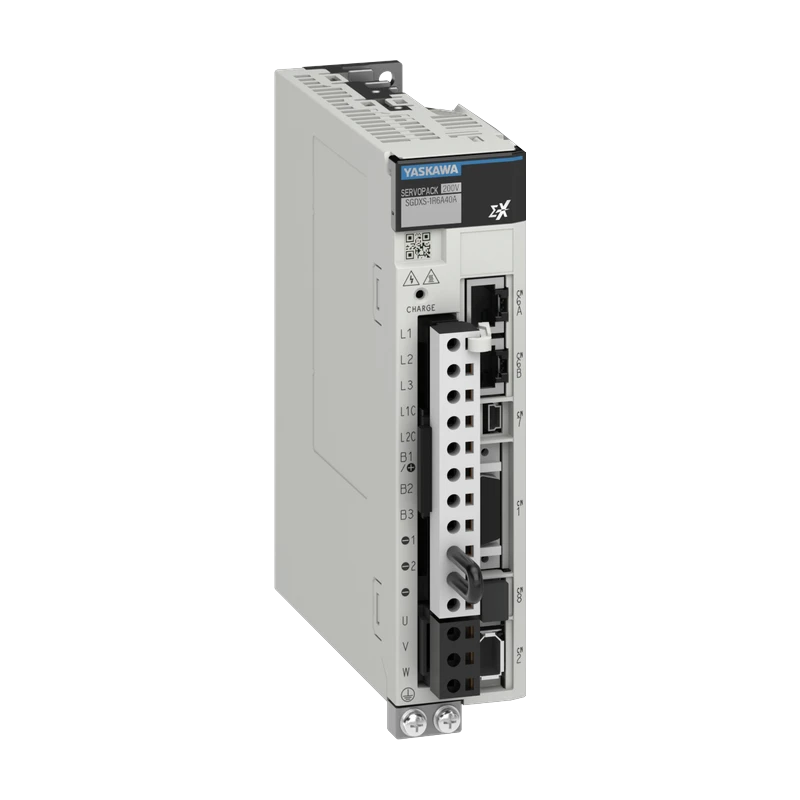 YaskawaSGDXS Sigma-X Single-Axis Servo DriveSingle-axis servo drive, 50 W to 15 kW, for rotary, linear and direct drive motors. Controlled over EtherCAT.View product →
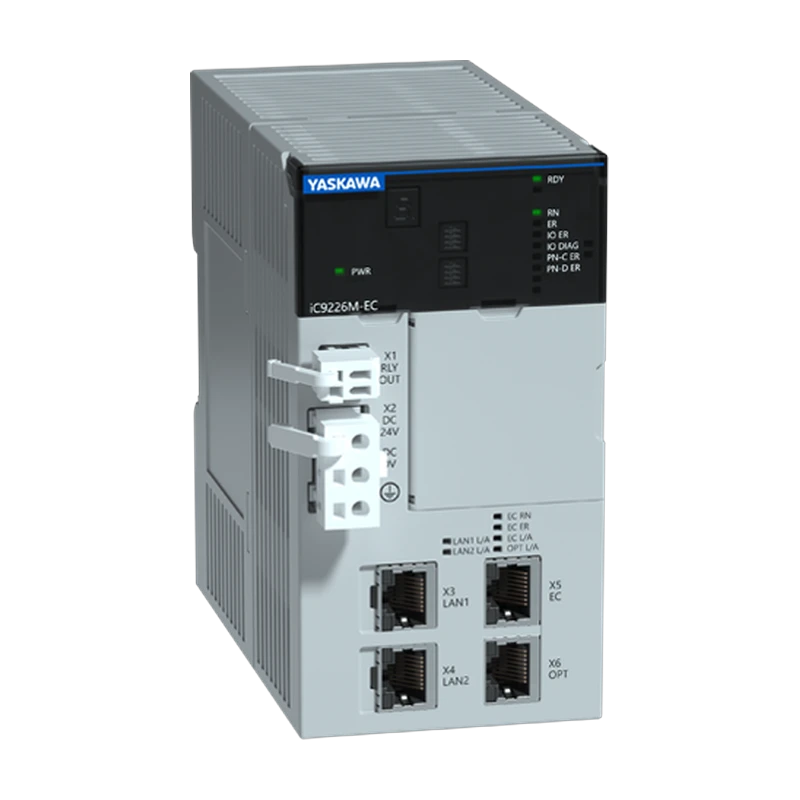 YaskawaiCube Control Machine ControllerPLCnext-based machine controller with EtherCAT master for up to 64 axes and FSoE for safety functions.View product →
Erik Ahlqvist is Managing Director of SCN and has spent more than 20 years helping industrial companies choose the right electronics for demanding environments. He holds a BSc in Electronics from KTH Royal Institute of Technology, Stockholm.
LinkedIn profileFrequently asked questions
What is the difference between a servo motor and a standard motor?
A servo motor is built for fast acceleration and precise positioning and always has an encoder. A standard induction motor is built for steady speed over long periods.
What does a servo drive do?
It powers the motor and controls position, speed and torque based on the encoder signal. It is also called a servo amplifier, and SERVOPACK at Yaskawa.
What is inertia ratio?
The ratio between the load inertia, referred to the motor shaft, and the motor’s own inertia. A low ratio, often below 10:1, gives a faster and more stable axis.
Can I mix a servo motor and servo drive from different makers?
Sometimes, but the drive must support the motor encoder and motor data. The simplest choice is a motor and drive from the same series.
Building a new axis or replacing an older servo system? Ask us – you get an answer within 24 hours.
Ask us