
OCD-CAA1B-0013-B10S-PRN Absolute encoder
Optical absolute encoder, CANopen, Ø10 mm shaft
Optical absolute encoder, CANopen, Ø10 mm shaft
Absolute encoders output the angular position of a shaft as a unique value and retain the position even after a power interruption. SCN supplies absolute encoders from Posital, including IXARC rotary encoders in the UCD, OCD, OCE, OCM and TCR model families. They are used for position and angle measurement in industrial automation, machine building, mobile machinery and vehicles. Our engineers help you choose the right interface, resolution, shaft or hollow-shaft design and connector for your application.
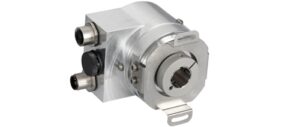
Optical absolute encoder, CANopen, Ø10 mm shaft
Optical absolute encoder, CANopen, Ø10 mm shaft
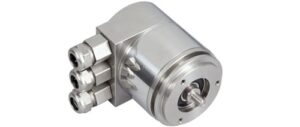
Optical absolute encoder, PROFIBUS-DP, Ø12 mm shaft
Optical absolute encoder, PROFIBUS-DP, Ø12 mm shaft
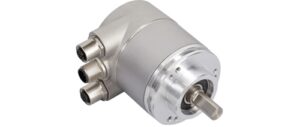
Optical absolute encoder, PROFIBUS-DP, Ø6 mm shaft
Optical absolute encoder, PROFIBUS-DP, Ø6 mm shaft
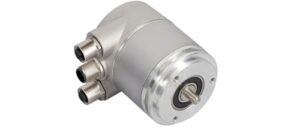
Optical absolute encoder, EtherNet/IP, Ø10 mm shaft
Optical absolute encoder, EtherNet/IP, Ø10 mm shaft
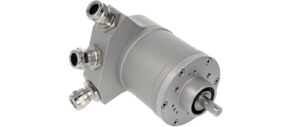
Optical absolute encoder, EtherCAT, ATEX, Ø12 mm shaft
Optical absolute encoder, EtherCAT, ATEX, Ø12 mm shaft
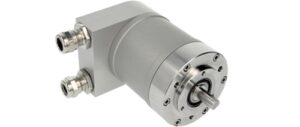
Optical absolute encoder, EtherNet/IP, Ø12 mm shaft
Optical absolute encoder, EtherNet/IP, Ø12 mm shaft
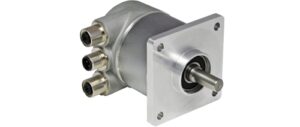
Optical absolute encoder, PROFINET, Ø10 mm shaft
Optical absolute encoder, PROFINET, Ø10 mm shaft
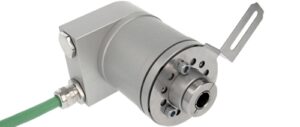
Optical absolute encoder, PROFINET, Ø14 mm shaft
Optical absolute encoder, PROFINET, Ø14 mm shaft
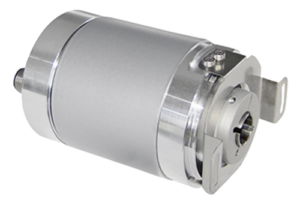
Redundant CANopen encoder, 12-bit multiturn, Ø15 mm shaft
Redundant CANopen encoder, 12-bit multiturn, Ø15 mm shaft
Redundant CANopen encoder, 12-bit multiturn, Ø15 mm shaft
Redundant CANopen encoder, 12-bit multiturn, Ø15 mm shaft
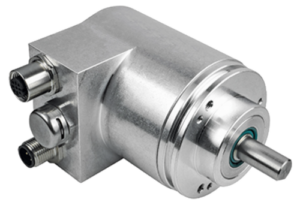
Redundant CANopen encoder, 12-bit multiturn, Ø6 mm shaft
Redundant CANopen encoder, 12-bit multiturn, Ø6 mm shaft
Redundant CANopen encoder, 12-bit multiturn, Ø10 mm shaft
Redundant CANopen encoder, 12-bit multiturn, Ø10 mm shaft
Redundant CANopen encoder, 12-bit multiturn, Ø10 mm shaft
Redundant CANopen encoder, 12-bit multiturn, Ø10 mm shaft
Redundant CANopen encoder, 12-bit multiturn, Ø12 mm shaft
Redundant CANopen encoder, 12-bit multiturn, Ø12 mm shaft
Redundant CANopen encoder, 12-bit multiturn, Ø12 mm shaft
Redundant CANopen encoder, 12-bit multiturn, Ø12 mm shaft
Redundant CANopen encoder, 14-bit multiturn, Ø12 mm shaft
Redundant CANopen encoder, 14-bit multiturn, Ø12 mm shaft
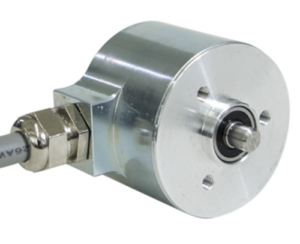
Magnetic absolute encoder, 4–20 mA, Ø5 mm shaft, 2 m cable
Magnetic absolute encoder, 4–20 mA, Ø5 mm shaft, 2 m cable
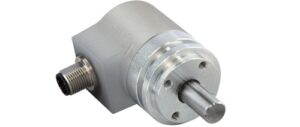
Magnetic encoder, 4–20 mA, IP69K, Ø10 mm shaft, M12
Magnetic encoder, 4–20 mA, IP69K, Ø10 mm shaft, M12
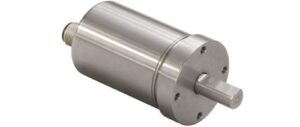
Magnetic absolute encoder, 4–20 mA, IP69K, 42 mm flange
Magnetic absolute encoder, 4–20 mA, IP69K, 42 mm flange
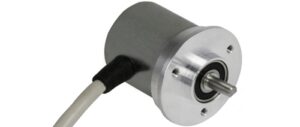
Magnetic encoder, 4–20 mA, 50 mm flange, Ø6 mm shaft
Magnetic encoder, 4–20 mA, 50 mm flange, Ø6 mm shaft
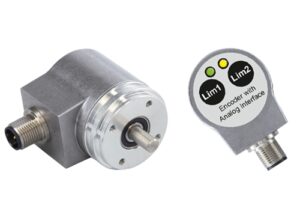
Magnetic absolute encoder, 4–20 mA, Ø6 mm shaft, M12, IP65
Magnetic absolute encoder, 4–20 mA, Ø6 mm shaft, M12, IP65
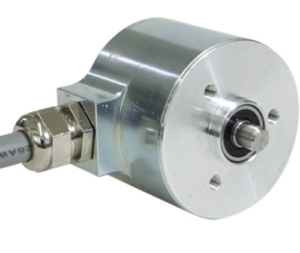
Magnetic absolute encoder, 0–10 V, Ø5 mm shaft, 2 m cable
Magnetic absolute encoder, 0–10 V, Ø5 mm shaft, 2 m cable
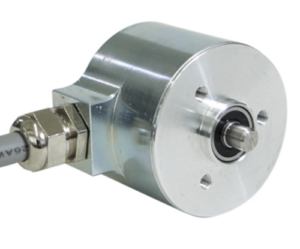
Magnetic encoder, 0.5–4.5 V, Ø5 mm shaft, 2 m cable
Magnetic encoder, 0.5–4.5 V, Ø5 mm shaft, 2 m cable
Magnetic encoder, IP69K, Ø10 mm shaft, 2 m axial cable
Magnetic encoder, IP69K, Ø10 mm shaft, 2 m axial cable
Magnetic encoder, IP69K, Ø10 mm shaft, 2 m radial cable
Magnetic encoder, IP69K, Ø10 mm shaft, 2 m radial cable
An absolute encoder, also called an absolute rotary encoder, gives every shaft position its own unique value. The position is known as soon as the power is switched on, without a reference run, which is why absolute encoders measure angle and position in cranes, wind turbines, packaging and printing machines, mobile machinery and robotics. SCN supplies absolute encoders from Posital: magnetic IXARC encoders in the UCD family, optical encoders in the OCD, OCE and OCM families, and redundant CANopen encoders in the TCR family.
The range covers single-turn and multi-turn models with solid or hollow shaft, resolutions up to 16 bits per turn, IP69K versions for washdown and outdoor use, ATEX versions, and interfaces from SSI and analog 4–20 mA or 0.5–4.5 V to IO-Link, CANopen, PROFIBUS-DP, PROFINET and EtherCAT. If you only need speed or relative movement, incremental encoders are a simpler choice. For straight-line movement, see incremental linear position sensors. All sensor types are listed under Sensors.
How to choose: first decide between single-turn and multi-turn, and the resolution you need. Then choose the interface your controller uses, solid or hollow shaft and its diameter, flange, and connector or cable outlet. Finally check the IP rating, temperature range and any approvals the environment requires.
An absolute encoder reports the actual position as a unique value, while an incremental encoder only sends pulses that the controller has to count from a reference point. After a power failure the absolute encoder knows its position at once; an incremental encoder needs a new homing run. Incremental encoders are simpler and well suited to measuring speed.
A single-turn encoder measures the angle within one revolution and starts again after 360°. A multi-turn encoder also counts the revolutions, which is needed when the shaft turns many times over the travel, for example on a winch, a spindle or a telescopic boom. Posital's IXARC multi-turn encoders count turns with a Wiegand energy-harvesting sensor, so they need neither battery nor gearbox.
A magnetic encoder is the robust choice: it tolerates shock, vibration, dust and moisture and is available up to IP69K. An optical encoder reads a coded disc and gives the highest resolution and accuracy, which suits precise positioning in machine tools and printing. For most machines, cranes and mobile equipment a magnetic encoder typically offers enough resolution at a lower cost.
Choose the interface your controller already uses. SSI is a simple and fast point-to-point interface common in motion control. CANopen is widespread in mobile machinery, IO-Link gives easy parameter setting over standard cables, and PROFINET, EtherCAT or PROFIBUS-DP connect the encoder directly to the PLC network. Analog 4–20 mA suits simple angle monitoring.
Not sure which model you need?
Get help choosingFacts and advice that make the choice easier.
Absolute vs incremental encoder – how to chooseIP ratings explained – IP65, IP67, IP68 and IP69KAll guides
If you have questions about our products the AI-assistant can help guide you to what you are searching for.


