




IP ratings explained – IP65, IP67, IP68 and IP69K
The IP code shows how well a sensor, computer or connector resists dust and water. This guide explains what the digits mean, how the tests are done and which rating you actually need – from the control cabinet to high-pressure washdown in the food industry.
 By Erik Ahlqvist, Managing Director of SCN · Updated 24 October 2026 · 6 min read
- IP65 – dust-tight and protected against water jets. Enough for most machines indoors.
- IP67 – withstands being 1 metre under water for 30 minutes.
- IP68 – withstands longer immersion. Depth and time are set by the manufacturer.
- IP69K – withstands high-pressure washdown with 80 °C water. Standard in food processing and vehicle washing.
- A higher number is not always better: IP67 does not automatically mean the product survives water jets like IP66.
How to read the IP code
IP stands for Ingress Protection and is defined in IEC 60529 (EN 60529 in Europe). The code has two digits. The first gives protection against solid objects and dust, the second against water. An X instead of a digit, as in IPX7, means that property has not been tested or specified.
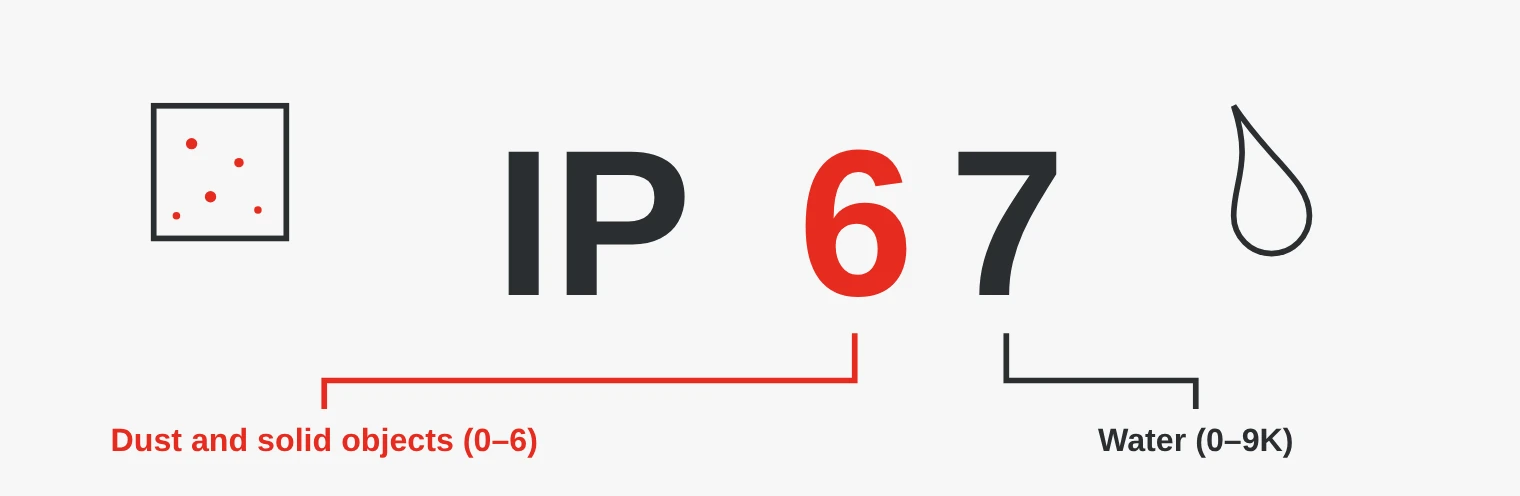
First digit – dust and solid objects
| Digit | Protected against |
|---|---|
| 0 | No protection |
| 1 | Objects larger than 50 mm, such as a hand |
| 2 | Objects larger than 12.5 mm, such as fingers |
| 3 | Objects larger than 2.5 mm, such as tools |
| 4 | Objects larger than 1 mm, such as wires and small screws |
| 5 | Dust-protected: some dust may enter, but not enough to affect operation |
| 6 | Dust-tight: no dust enters |
Second digit – water
| Digit | Protected against |
|---|---|
| 0 | No protection |
| 1 | Vertically dripping water |
| 2 | Dripping water with the product tilted up to 15° |
| 3 | Spraying water up to 60° from vertical |
| 4 | Splashing water from any direction |
| 5 | Water jets (6.3 mm nozzle, 12.5 litres per minute) |
| 6 | Powerful water jets (12.5 mm nozzle, 100 litres per minute) |
| 7 | Temporary immersion: 1 metre for 30 minutes |
| 8 | Longer immersion: depth and time set by the manufacturer, more severe than 7 |
| 9K | High-pressure and steam cleaning: 80 °C, 80–100 bar (ISO 20653) |
How the water tests work
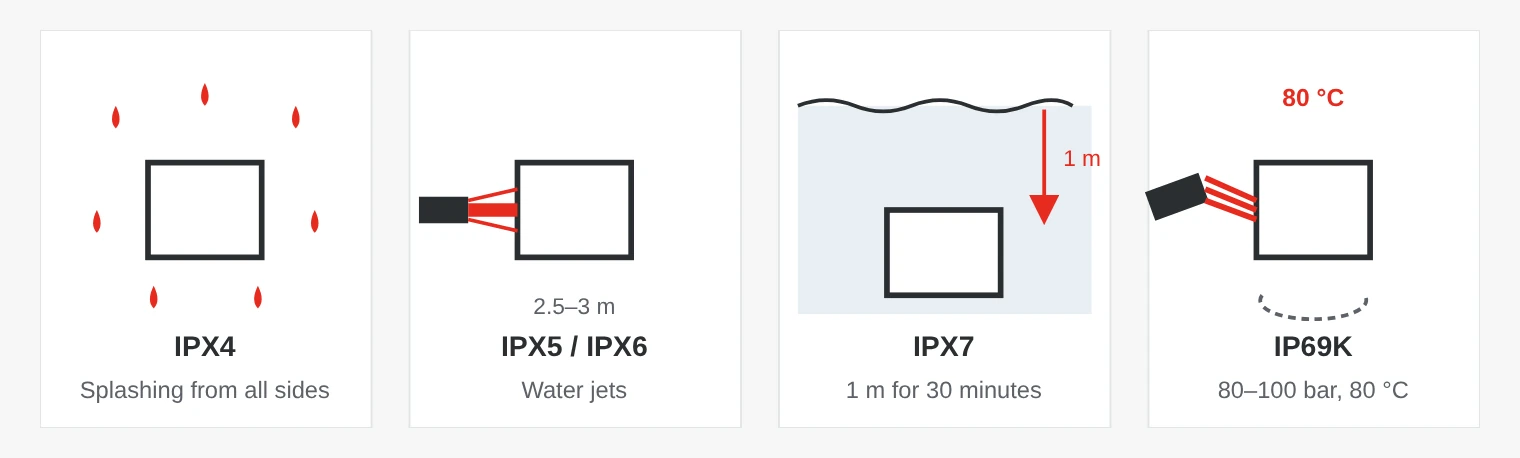
For IPX4 the product is splashed from all directions for ten minutes. IPX5 and IPX6 are sprayed with a water jet from 2.5–3 metres for at least three minutes, at 12.5 and 100 litres per minute respectively.
For IPX7 the product is immersed so that it sits one metre below the surface for 30 minutes. For IPX8 the manufacturer sets depth and time, and the conditions should be stated in the datasheet.
IP69K is tested with 80 °C water at 80–100 bar and 14–16 litres per minute. The nozzle is held 10–15 centimetres from the product and sprays for 30 seconds from four angles while the product rotates. The code comes from the automotive standard ISO 20653 (formerly DIN 40050-9). Since 2013 IEC 60529 also includes IPX9, with a similar test.
IP67 is not always better than IP66
The digits up to 6 build on each other: a product rated IPX6 also meets IPX5 and IPX4. But 7 and 8 are a different kind of test. Surviving still water says nothing about how a product copes with a powerful jet from the side, where the water pushes against the seals in a completely different way.
A product that has to meet both must be tested for both. That is why you often see dual markings such as IP66/IP67 or IP67/IP69K. If a product is only marked IP67 and will be hosed down, ask for IP66 as well.
Which IP rating do you need?
Start from the toughest situation the product will face – often the cleaning, not normal operation.
| Environment | What happens | Choose at least |
|---|---|---|
| Inside a control cabinet | Dust, no moisture | IP20 |
| Dry factory floor | Dust and occasional splashes | IP54 |
| Machines that are hosed down, dusty sites | Dust and water jets | IP65 |
| Outdoors and mobile machines | Rain, hoses, mud and dirt | IP66 and IP67 |
| Risk of flooding or puddles | Temporary immersion | IP67 |
| Permanently under water | Constant pressure | IP68 with stated depth and time |
| Food, pharma and vehicle washing | High pressure, hot water and detergents | IP69K and the right materials |
| Panel PC in a cabinet door | Water and dust on the front | IP65 or IP66 front |
Five pitfalls to avoid
- The connector counts too. IP67 on a sensor only applies when the connector is mated or capped. An M12 connector that is not tightened, or a cable with the wrong gland, lowers the rating of the whole installation.
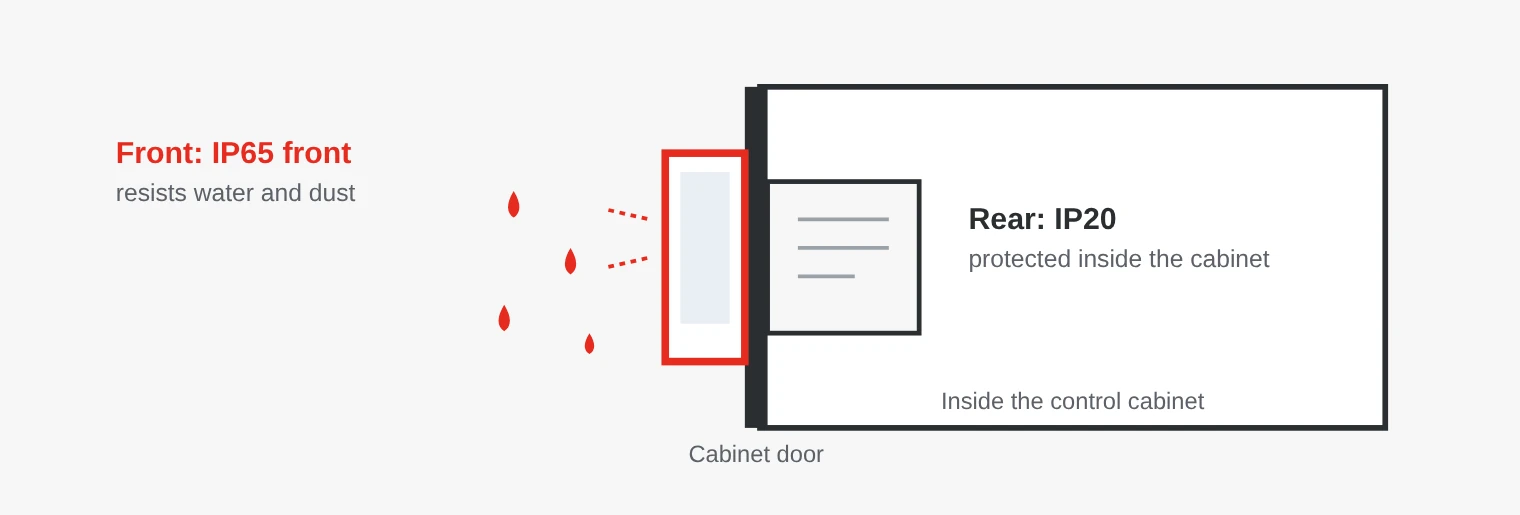
- “Front” means the front only. Panel PCs and displays often have IP65 or IP66 on the front but IP20 at the rear, because the rear sits inside the cabinet. At SCN this applies to more than 300 products.
- Condensation is not in the IP code. A sealed enclosure that heats up and cools down can draw in moisture through seals and cable glands. Outdoors and in cold stores, a pressure-equalising vent helps.
- IP68 is not a fixed value. Two IP68 products may have been tested in very different ways, for example 1.5 metres for an hour or several metres for several days. Compare the conditions in the datasheets.
- IP69K says nothing about chemicals. The tests use clean water. In food processing the material matters too: stainless steel, the right seals and resistance to cleaning agents.
IP-rated products from SCN
We carry more than 960 products rated IP67, over 530 rated IP69K and more than 400 rated IP68 – from inductive sensors and photoelectric sensors to panel PCs and connectors. You can filter by IP rating in the categories.
Examples from our range
 PositalAKS-360-1-CA01-VK2-PW InclinometerIP69K – withstands high-pressure washdown. CANopen inclinometer for mobile machines, −40 to 75 °C.View product →
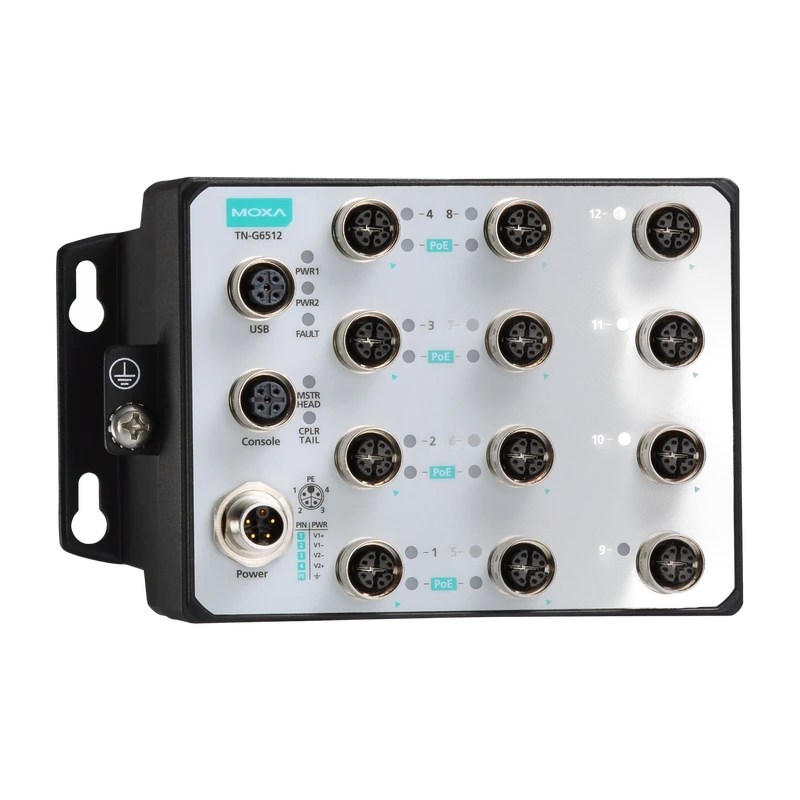 MoxaTN-G6500 12-Port Gigabit IP67 M12 SwitchIP67 – fully sealed switch with M12 connectors and PoE, for trains and outdoor sites.View product →
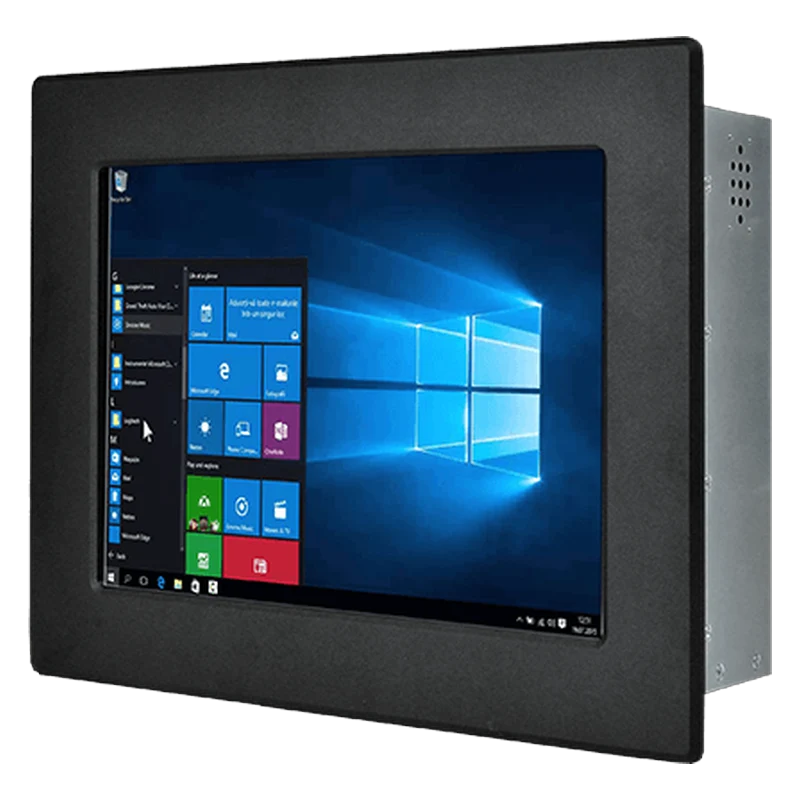 WinmateR10IE3S-IPT2 10.4" Front IP65 Panel PCIP65 front – sealed front in the cabinet door, protected rear.View product →
Erik Ahlqvist is Managing Director of SCN and has spent more than 20 years helping industrial companies choose the right electronics for demanding environments. He holds a BSc in Electronics from KTH Royal Institute of Technology, Stockholm.
LinkedIn profileFrequently asked questions
Is IP68 better than IP69K?
Not necessarily. IP68 covers long-term immersion, IP69K covers high-pressure washdown with hot water. If the product has to withstand both, it should be marked with both.
What is the difference between IP65 and IP67?
Both are dust-tight. IP65 withstands water jets, IP67 withstands being one metre under water for 30 minutes. If a product will be hosed down and may end up under water, choose one marked with both.
What does the X in IPX7 mean?
That dust protection has not been tested or specified. The product is tested for water to level 7.
Does the IP rating last for the product’s whole life?
The tests are done on new products. Ageing seals, damaged cables and incorrect installation can reduce the protection over time.
Not sure what your environment needs? We help you choose the right sensor, computer or connector – you get an answer within 24 hours.
Ask us