
Servopack Sigma 7
Servo amplifiers for servo motor systems
Servo amplifiers for servo motor systems
Servopacks are servo drives that control the current, speed and position of servo motors. SCN supplies servopacks from Yaskawa in the Sigma-5 and Sigma-7 series. They are used with servo motors in packaging machines, handling systems and machine building. Our engineers help you choose the right servopack, motor combination and interface for your application.

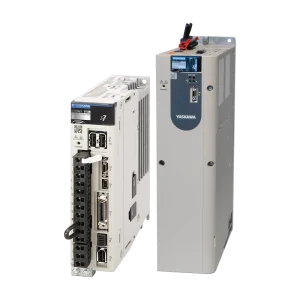
Dual-axis servo drive with built-in controller
Dual-axis servo drive with built-in controller
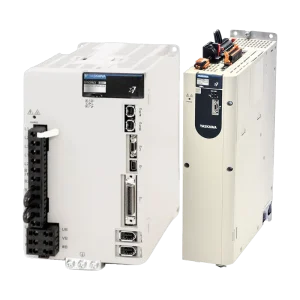
Dual-axis servo drive, MECHATROLINK-III, STO
Dual-axis servo drive, MECHATROLINK-III, STO
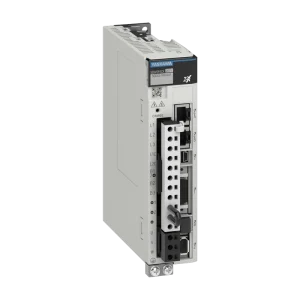
Single-axis servo drive, 50 W–15 kW, EtherCAT
Single-axis servo drive, 50 W–15 kW, EtherCAT
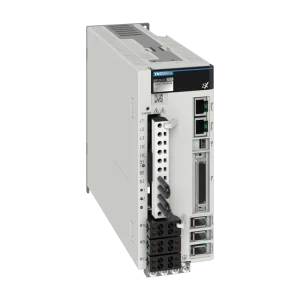
Triple-axis servo drive, 200–400 W per axis, EtherCAT
Triple-axis servo drive, 200–400 W per axis, EtherCAT
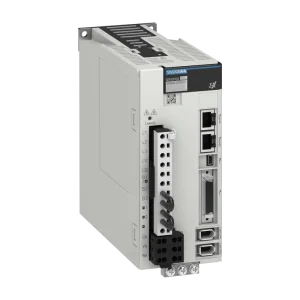
Dual-axis servo drive, 200–750 W per axis, EtherCAT
Dual-axis servo drive, 200–750 W per axis, EtherCAT
A servopack is Yaskawa's name for a servo drive, also called a servo amplifier. It takes the position, speed or torque command from the controller, compares it with the feedback from the motor encoder and regulates the motor current continuously, so the servo motor follows the command precisely. Servopacks are used in packaging, handling, robotics, printing and machine tools. SCN supplies servopacks from Yaskawa.
The range includes the Sigma-7 series, with the SGD7W dual-axis drive and the SGD7C with built-in motion controller, and the newer Sigma-X series as single-axis SGDXS, dual-axis SGDXW and triple-axis SGDXT. Models cover 50 W to 15 kW for 200 VAC single- or three-phase and 400 VAC supply, with EtherCAT, MECHATROLINK or Profinet, and several have safety functions up to PL e and SIL 3. Matching motors are under servo motors and rotary servo motors, and controllers under PLC systems.
How to choose: start with the motor, because the servopack must match its series and power. Then choose the supply voltage, the number of axes per drive, the network your controller uses and whether you need built-in safety or a motion controller in the drive.
A servo drive is the power electronics that makes a servo motor do exactly what the controller commands. It runs three nested control loops – position, speed and current – and uses the encoder signal from the motor to correct any deviation continuously. The result is fast, accurate motion with full torque even at standstill, which a standard frequency inverter cannot hold as precisely.
Use the network your motion controller or PLC already runs. EtherCAT is widespread for fast multi-axis motion and is supported by controllers from many vendors, MECHATROLINK is Yaskawa's own motion network for Yaskawa controllers, and Profinet suits lines built on Siemens PLCs. Check the interface of the exact Sigma-7 or Sigma-X model in its data sheet.
A multi-axis servopack such as the SGD7W or SGDXW (two axes) or SGDXT (three axes) saves cabinet space, wiring and cost per axis when a machine has several small or medium axes close together. Single-axis drives such as the SGDXS are simpler to size and replace, and suit larger motors or axes spread across the machine.
Most machines need at least Safe Torque Off (STO), which removes torque from the motor without disconnecting the drive's supply, so the machine restarts quickly after a stop. The required performance level comes from the risk assessment. Several Sigma-7 and Sigma-X servopacks in the range are rated up to PL e and SIL 3; external safety relays or a safety PLC handle the rest of the circuit.
Not sure which model you need?
Get help choosingFacts and advice that make the choice easier.
Servo motors and servo drives – how servo systems workVariable frequency drives – how to choose the right VFDAll guides
If you have questions about our products the AI-assistant can help guide you to what you are searching for.


