
DIN rail adaptors
DIN rail adaptors for relays and heatsinks
DIN rail adaptors for relays and heatsinks
Solid state relays (SSR) switch loads electronically, without moving contacts, which gives silent and wear-free operation even at high switching frequencies. SCN supplies SSRs from celduc: 1-phase, 2-phase and 3-phase relays, DC solid-state motor reversers, and accessories such as heatsinks and thermal seals. The range includes models from 30 A to 125 A, for example in the SGT and SMB series. Typical applications are heating control, plastics machinery, packaging machines, motor switching and lighting. Our engineers help you choose the right load current, number of phases, control voltage and heatsink for your application.

DIN rail adaptors for relays and heatsinks
DIN rail adaptors for relays and heatsinks

Solid-state DC motor reverser up to 1.5 kV / 200 A
Solid-state DC motor reverser up to 1.5 kV / 200 A

Voltage protection for DC SSRs, 0-80A, 0-130VDC
Voltage protection for DC SSRs, 0-80A, 0-130VDC

Current monitoring module for up to 5 heaters, 2–40 A
Current monitoring module for up to 5 heaters, 2–40 A
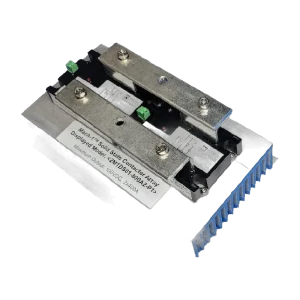
DC solid-state switch assembly, 60–100 VDC, up to 1000 A
DC solid-state switch assembly, 60–100 VDC, up to 1000 A
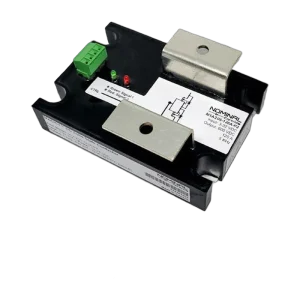
Bi-directional solid-state contactor, AC/DC, up to 300 A
Bi-directional solid-state contactor, AC/DC, up to 300 A

DC solid-state contactor, 2000 VDC, 500 A per module
DC solid-state contactor, 2000 VDC, 500 A per module
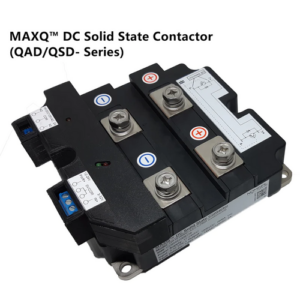
IGBT solid-state contactor, up to 6 kV and 3 kA
IGBT solid-state contactor, up to 6 kV and 3 kA

Mounting kits for relays on heatsinks and DIN adaptors
Mounting kits for relays on heatsinks and DIN adaptors

Mounting kits, heatsinks and DIN adaptors for SSR
Mounting kits, heatsinks and DIN adaptors for SSR
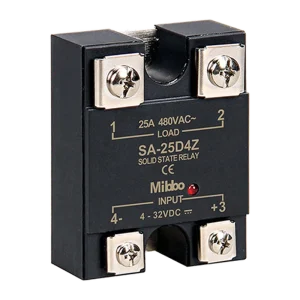
Solid state relay, 10–90 A, up to 660 VAC, AC/DC input
Solid state relay, 10–90 A, up to 660 VAC, AC/DC input

Single-phase solid state relay, 25A, 12-275VAC
Single-phase solid state relay, 25A, 12-275VAC
Single-phase solid state relay, 12A, 12-280VAC
Single-phase solid state relay, 12A, 12-280VAC
Single-phase solid state relay, 25A, 12-280VAC
Single-phase solid state relay, 25A, 12-280VAC
Single-phase solid state relay, 35A, 12-280VAC
Single-phase solid state relay, 35A, 12-280VAC
Single-phase solid state relay, 50A, 12-280VAC
Single-phase solid state relay, 50A, 12-280VAC
Single-phase solid state relay, 35A, 24-600VAC
Single-phase solid state relay, 35A, 24-600VAC
Single-phase solid state relay, 50A, 24-600VAC
Single-phase solid state relay, 50A, 24-600VAC
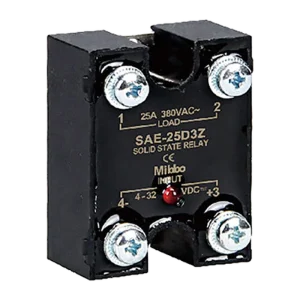
Mini solid state relay, 10–25 A, 48–440 VAC, 4–32 VDC
Mini solid state relay, 10–25 A, 48–440 VAC, 4–32 VDC

Single-phase solid state relay, 12A, 12-280VAC
Single-phase solid state relay, 12A, 12-280VAC
Single-phase solid state relay, 25A, 12-280VAC
Single-phase solid state relay, 25A, 12-280VAC
Single-phase solid state relay, 24-600VAC, 1200V peak
Single-phase solid state relay, 24-600VAC, 1200V peak
Single-phase solid state relay, 24-600 VAC, 1200V peak
Single-phase solid state relay, 24-600 VAC, 1200V peak

Zero-cross solid state contactor, 24-600VAC, 35A
Zero-cross solid state contactor, 24-600VAC, 35A

Zero-cross solid state contactor with heatsink, 24-600VAC
Zero-cross solid state contactor with heatsink, 24-600VAC
A solid state relay switches a load electronically, with no moving contacts, which gives silent, wear-free operation even at high switching frequencies. SSRs are used for temperature control of heating elements in plastics machines, ovens and packaging lines, and for frequent switching of motors, lamps and valves. SCN supplies solid state relays from celduc and DC motor reversers from Nominal Controls.
Under 2 and 3 phase you find celduc SOB and SOBR relays that switch two phases from 2×15 A to 2×75 A at up to 600 V AC, and three-phase SGT, SMB and SGB relays from 3×24 A to 3×125 A at up to 660 V AC, with 4–30 V DC or 90–280 V AC/DC control and versions with push-in terminals. Accessories include WF heatsinks from 3 down to 0.3 K/W, thermal pads, DIN rail adaptors, mounting kits and the ESUC module that monitors current for up to five heaters. The DC Solid-State Motor Reverser DRV handles up to 1.5 kV and 200 A. More components are under Components.
How to choose: pick the number of phases and a current rating with margin, use zero-cross switching for resistive heaters, match the control voltage, then size the heatsink in K/W for the load current and cabinet temperature.
A solid state relay, SSR, is an electronic switch without moving contacts that turns an AC or DC load on when a small control signal is applied. Since nothing wears mechanically, an SSR handles millions of cycles, switches silently and suits frequent switching such as heater control. The trade-off is heat: an SSR typically dissipates about 1 to 1.5 W per ampere and needs a heatsink.
An SSR switches the load with semiconductors, thyristors or triacs for AC and MOSFETs for DC, driven through an optocoupler that isolates the control circuit from the load. A zero-cross SSR turns on when the mains voltage passes zero, which limits interference and suits resistive loads such as heaters. A random turn-on SSR switches immediately and suits inductive loads and phase angle control.
Connect the control signal, typically 4–30 V DC from a PLC output or temperature controller, to the input terminals with the correct polarity, and put the SSR output in series with the load in the phase line. A three-phase SSR such as the celduc SGT switches all three phases, while the SGB switches two and leaves the third connected. Mount it on a heatsink with a thermal pad and protect it with a fast semiconductor fuse.
Test an SSR with a load connected, because a multimeter alone on the output reads misleading values caused by leakage current. With no control signal the load should stay off; with the control voltage applied the load should run and the voltage across the SSR output should drop to typically 1 to 1.6 V. A relay that conducts without a control signal has a shorted output.
Not sure which model you need?
Get help choosingFacts and advice that make the choice easier.
Relay vs contactor vs SSR – which should you choose?All guides
If you have questions about our products the AI-assistant can help guide you to what you are searching for.


