
Field-BUS TWC LPT LPC Sliprings
Fieldbus slip rings for Profibus, PROFINET and EtherCAT
Fieldbus slip rings for Profibus, PROFINET and EtherCAT
Slip rings for transferring power, signals and data across rotating interfaces. A slip ring lets cables and conductors follow unlimited rotation without twisting or wearing out. SCN supplies slip rings from JINPAT: capsule slip rings, through-bore slip rings, pancake, miniature and high-current slip rings. We also offer Ethernet, USB and HDMI versions, fibre optic and RF coaxial rotary joints, and pneumatic and hydraulic rotary unions.
Our slip rings are used in packaging machines, robots, indexing tables, camera systems, cranes and wind turbines. If no standard model fits, we build a custom slip ring to your specification. Our engineers help you choose the right number of circuits, current rating, bore size and IP rating for your application.
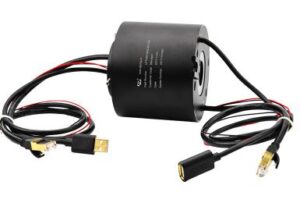
Fieldbus slip rings for Profibus, PROFINET and EtherCAT
Fieldbus slip rings for Profibus, PROFINET and EtherCAT
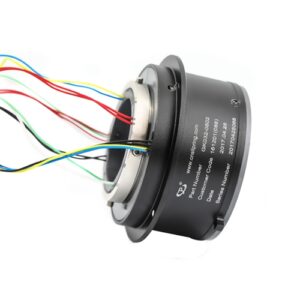
Long-life slip ring, replaceable parts, 8 circuits, 2000 rpm
Long-life slip ring, replaceable parts, 8 circuits, 2000 rpm
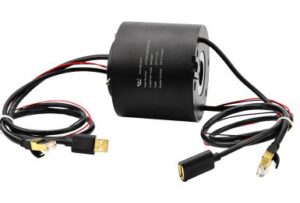
HDMI 1.4 slip rings, 10.2 Gbps, with power and signal
HDMI 1.4 slip rings, 10.2 Gbps, with power and signal
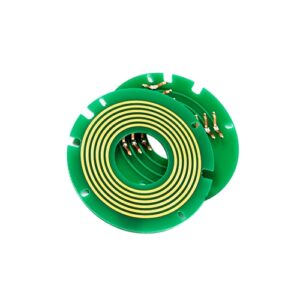
Hybrid pancake slip ring, 6 circuits, max 100 rpm
Hybrid pancake slip ring, 6 circuits, max 100 rpm
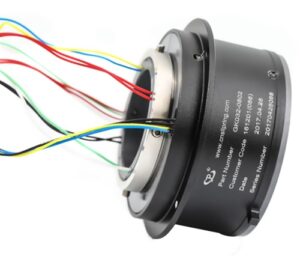
Slip rings with replaceable modular wear parts
Slip rings with replaceable modular wear parts
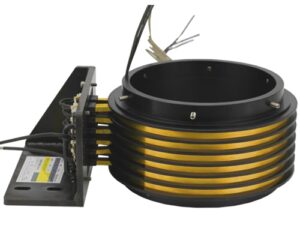
High-current slip rings, graphite brushes, 2000 A peak
High-current slip rings, graphite brushes, 2000 A peak
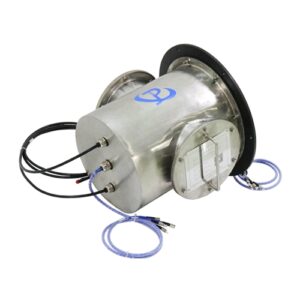
High-current slip ring, fiber optics, IP66, stainless steel
High-current slip ring, fiber optics, IP66, stainless steel
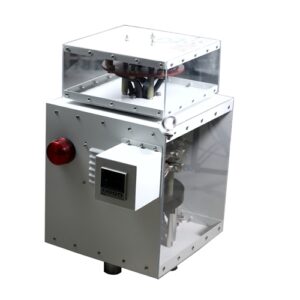
High-current slip ring, 18 circuits, IP65, max 20 rpm
High-current slip ring, 18 circuits, IP65, max 20 rpm
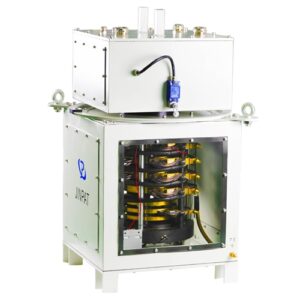
High-current slip ring, 12 circuits, IP54, max 20 rpm
High-current slip ring, 12 circuits, IP54, max 20 rpm
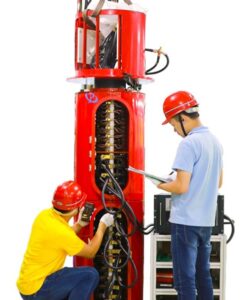
High-current slip ring, graphite brushes, IP54, max 20 rpm
High-current slip ring, graphite brushes, IP54, max 20 rpm
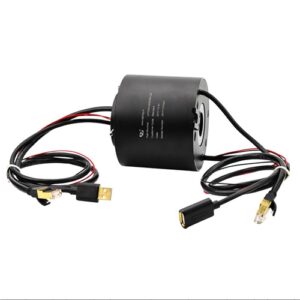
Ethernet slip rings for 100/1000BASE-T, power and signal
Ethernet slip rings for 100/1000BASE-T, power and signal
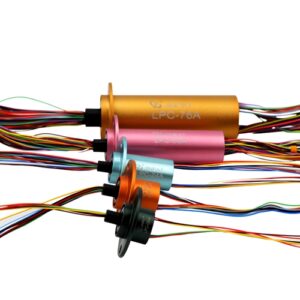
Compact capsule slip rings, up to 125 circuits, 300 rpm
Compact capsule slip rings, up to 125 circuits, 300 rpm
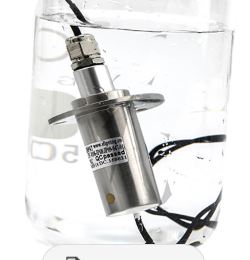
Integrated LPC solutions for power, data, gas and liquid
Integrated LPC solutions for power, data, gas and liquid
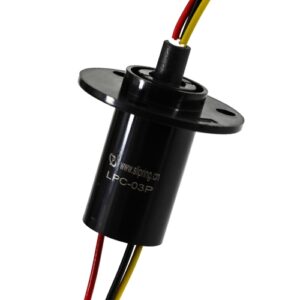
Ø22 mm capsule slip ring, 3 circuits, IP54, 300 rpm
Ø22 mm capsule slip ring, 3 circuits, IP54, 300 rpm
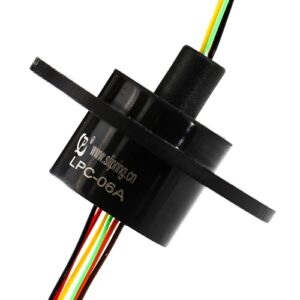
Capsule slip ring, 6 circuits, Ø22 mm, IP54, max 300 rpm
Capsule slip ring, 6 circuits, Ø22 mm, IP54, max 300 rpm
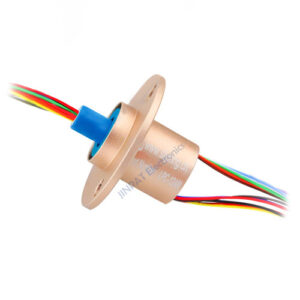
Capsule slip ring, 6 circuits, Ø20 mm, length 19.2 mm, IP40
Capsule slip ring, 6 circuits, Ø20 mm, length 19.2 mm, IP40
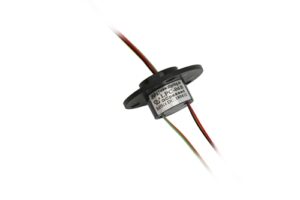
Capsule slip ring, 6 circuits, Ø22 mm, IP54, max 300 rpm
Capsule slip ring, 6 circuits, Ø22 mm, IP54, max 300 rpm
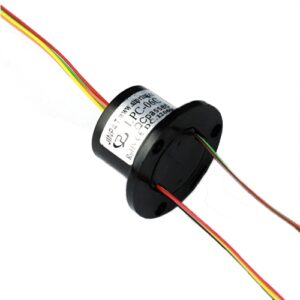
Capsule slip ring, 6 circuits, Ø22 mm, IP54, max 300 rpm
Capsule slip ring, 6 circuits, Ø22 mm, IP54, max 300 rpm
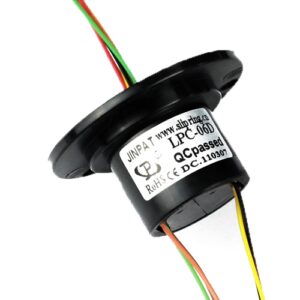
Capsule slip ring, 6 circuits, Ø22 mm, IP54, max 300 rpm
Capsule slip ring, 6 circuits, Ø22 mm, IP54, max 300 rpm
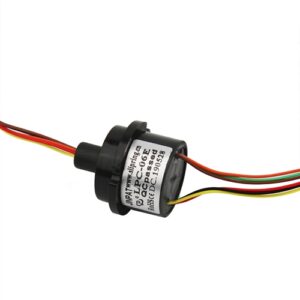
Capsule slip ring, 6 circuits, Ø22 mm, IP54, max 300 rpm
Capsule slip ring, 6 circuits, Ø22 mm, IP54, max 300 rpm
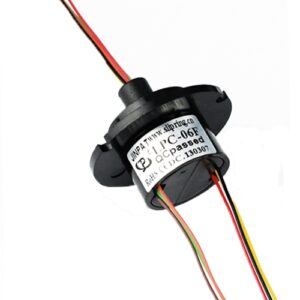
Capsule slip ring, 6 circuits, Ø22 mm, IP54, max 300 rpm
Capsule slip ring, 6 circuits, Ø22 mm, IP54, max 300 rpm
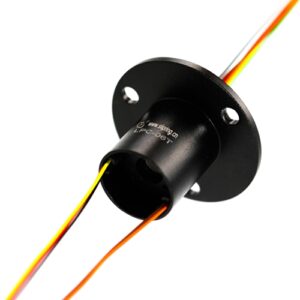
Capsule slip ring, 6 circuits, Ø22 mm, aluminium, IP54
Capsule slip ring, 6 circuits, Ø22 mm, aluminium, IP54
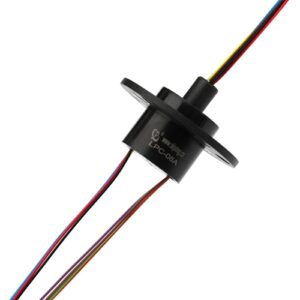
Capsule slip ring, 8 circuits, Ø22 mm, fiber brushes, IP54
Capsule slip ring, 8 circuits, Ø22 mm, fiber brushes, IP54
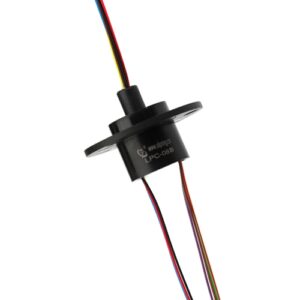
Capsule slip ring, 8 circuits, Ø22 mm, fiber brushes, IP54
Capsule slip ring, 8 circuits, Ø22 mm, fiber brushes, IP54
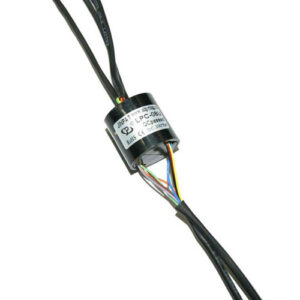
Capsule slip ring, 8 circuits, Ø22 mm, fiber brushes, IP54
Capsule slip ring, 8 circuits, Ø22 mm, fiber brushes, IP54
A slip ring is an electromechanical rotary joint that transfers power, signals and data from a stationary to a rotating part, so that cables can follow unlimited rotation without twisting. Brushes slide on rotating rings, one ring per circuit. Slip rings are used in packaging machines, indexing tables, robots, cranes, camera and radar systems, medical equipment and wind turbines. SCN supplies slip rings from JINPAT.
The range covers capsule slip rings, miniature slip rings with up to 76 circuits, through-hole slip rings with bores from 12.7 mm to 330 mm and flat pancake slip rings. For data there are Ethernet slip rings up to Gigabit, USB and HD-SDI versions and fibre optic rotary joints, while RF coax rotary joints reach 50 GHz. High-current slip rings, wind turbine slip rings and split separate slip rings cover heavy-duty and retrofit needs, and pneumatic rotary joints transfer air, fluids and vacuum. All component types are under Components.
How to choose: list the circuits with current and voltage per circuit, add the data signals, then fix the mechanics: shaft or bore diameter, speed and the IP rating the environment needs.
A slip ring transfers current through sliding contact: brushes on the stationary part press against conductive rings on the rotating part, one ring per circuit. Precious-metal contacts such as gold keep resistance and electrical noise low for signals, while larger rings and several brushes per ring carry high currents. Fibre brushes, used in JINPAT wind turbine slip rings, give long life with little wear.
Start with the number of circuits and the current per circuit, then add data such as Ethernet, USB or a fieldbus. Next choose the mounting: a capsule slip ring sits at the end of a shaft, while a through-hole slip ring lets a shaft, cables or an air line pass through the centre. Finally check speed, temperature and IP rating, from IP40 up to IP67.
Use a slip ring with circuits built for high-frequency data, with controlled impedance and shielding. JINPAT Ethernet slip rings carry 100 Mbit or Gigabit Ethernet – the LPT025 up to eight Gigabit channels – and there are versions for USB 2.0/3.0 and HD-SDI video. For very high bandwidth, a fibre optic rotary joint transmits light without electrical contact.
A slip ring transfers electricity – power, signals and data – while a rotary union or rotary joint transfers media such as air, hydraulic oil, water or gas through a rotating connection. Many machines need both, so the range also includes pneumatic rotary joints with integrated electrical circuits and hydraulic and gas rotary unions.
Not sure which model you need?
Get help choosingFacts and advice that make the choice easier.
Slip rings – how they work and how to choose oneAll guides
If you have questions about our products the AI-assistant can help guide you to what you are searching for.


