




Load cell types, accuracy classes and installation
A load cell converts force or weight into an electrical signal and sits at the heart of every industrial scale. This guide explains how it works, which types exist, what C3 means and how to install it so the scale weighs correctly.
 By Erik Ahlqvist, Managing Director of SCN · Updated 24 October 2026 · 6 min read
- Principle – strain gauges in a Wheatstone bridge give a few millivolts per volt of excitation, often 2 mV/V.
- Type – single point for platform scales, bending and shear beams for floor scales and tanks, S-type for tension and column cells for large loads.
- Class – C3 means class C to OIML R60 with 3,000 verification intervals. That is enough for most industrial scales.
- Electronics – a weight transmitter or indicator converts the signal to 4–20 mA, 0–10 V or fieldbus.
- Installation – side forces, shocks, welding current and rigid pipes cause more errors than the load cell itself.
How a load cell works
A load cell is a metal body, usually steel or aluminium, that bends very slightly under load. Strain gauges are bonded to it: thin metal foils whose resistance changes when they are stretched or compressed. Four gauges are connected in a Wheatstone bridge. Two stretch and two compress, so the signal is as large as possible while temperature effects cancel out.
The bridge is powered with an excitation voltage, often 5 or 10 V. The output is stated in mV/V at full load. A 2 mV/V load cell with 10 V excitation therefore gives 20 mV at rated load. The signal is weak and is amplified in a high-resolution weight indicator or transmitter.
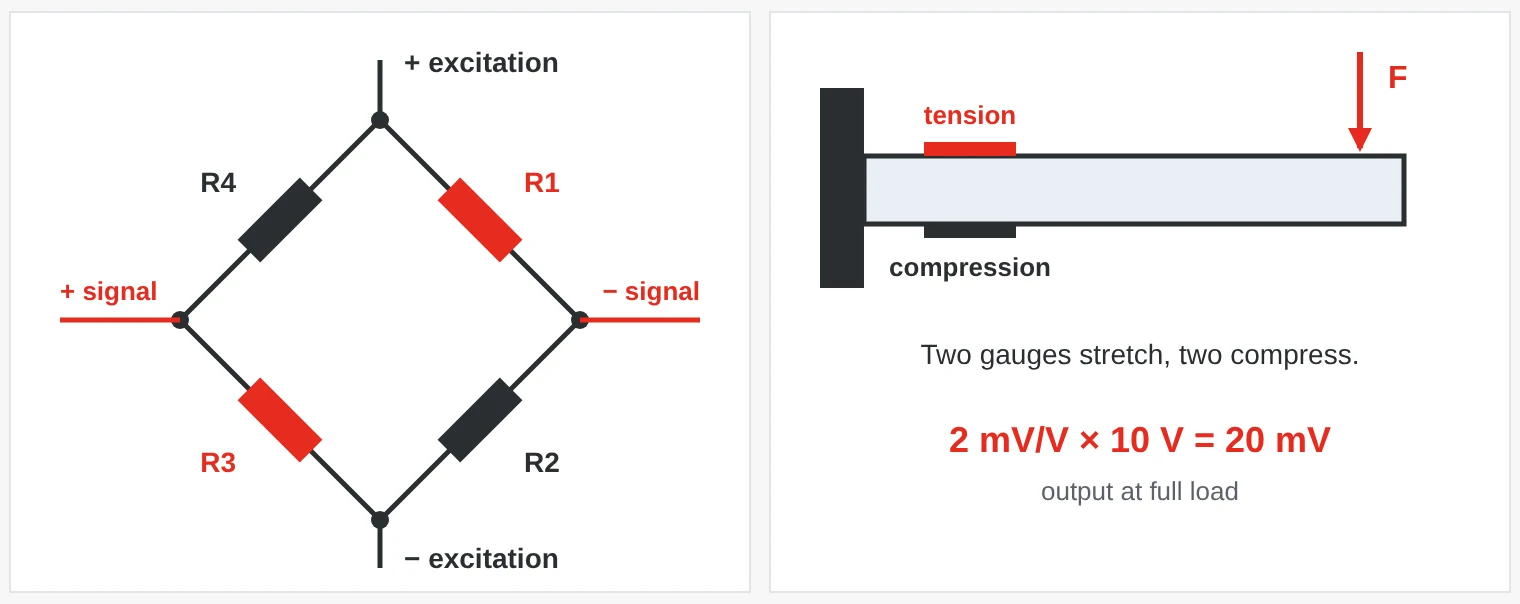
The cable has four or six wires. With six wires the electronics measure the excitation directly at the load cell, so voltage drop in the cable has no effect. A 4-wire cable is part of the cell’s calibration and must not be shortened.
Which type of load cell do you need?
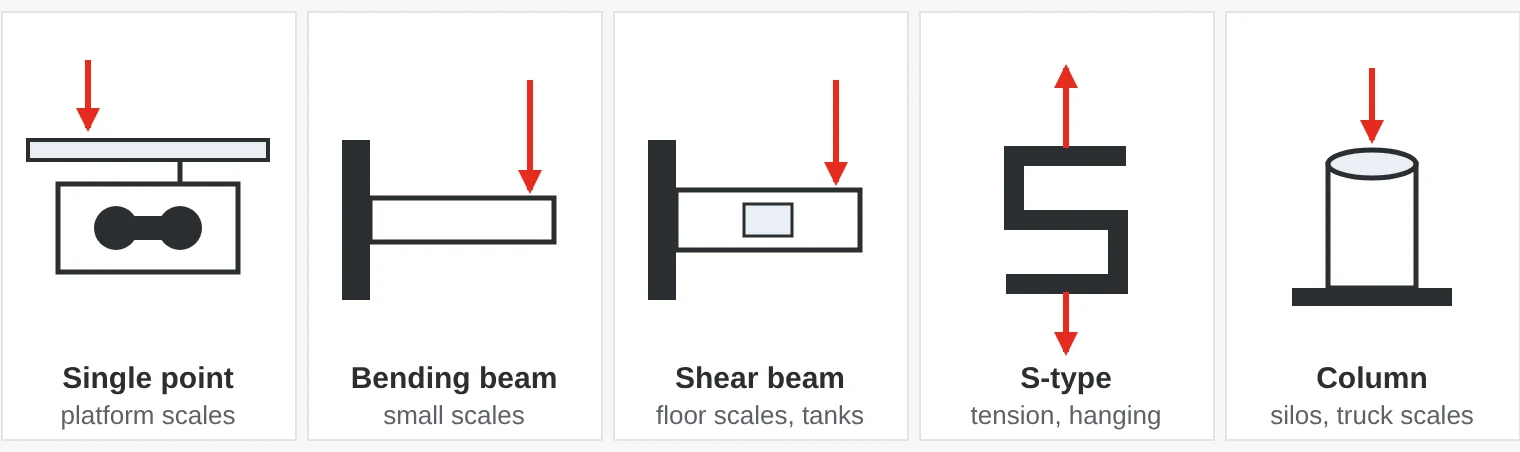
| Type | Typical use | Features |
|---|---|---|
| Single point | Platform and bench scales, packaging machines | One cell under the platform. Compensated for off-centre loads. |
| Bending beam | Small scales and dosing scales | Simple and cost-effective at low loads. |
| Shear beam | Floor scales, pallet scales, tanks and silos | Measures shear and is less sensitive to where the load acts. Common up to tens of tonnes. |
| S-type | Hanging scales, tensile tests, lifting | Measures tension and compression in line. |
| Column | Truck scales, large silos and tanks | For very large loads, up to hundreds of tonnes. |
There are also special cells, such as wire rope load cells that clamp onto a rope and act as overload protection on lifting equipment.
Accuracy classes – what does C3 mean?
Load cells for scales used in trade are classified to OIML R60. The letter gives the accuracy class and the number how many verification intervals, in thousands, the cell supports. C3 means class C with 3,000 intervals, C6 class C with 6,000.
| Class | Number of intervals | Typical use |
|---|---|---|
| A | 50,000 and above | Precision weighing in laboratories |
| B | 5,000–100,000 | Precision scales |
| C | 500–10,000 | Industrial and trade scales |
| D | 100–1,000 | Basic scales |
The scale itself is classified to OIML R76, where class III is the most common in industry and trade. The load cells must support at least as many intervals as the scale has divisions. A 3,000 kg scale with 1 kg divisions needs load cells rated for at least 3,000 intervals, such as C3. Automatic gravimetric filling instruments fall under OIML R61.
Also compare combined error (linearity and hysteresis), creep under constant load and how temperature affects zero and sensitivity.
From load cell to control system
- Analogue weight transmitter – converts the signal to 4–20 mA or 0–10 V for a PLC analogue input. Simple, but the input card limits resolution.
- Digital weight transmitter – sends the weight over Modbus, Profinet, EtherNet/IP or another fieldbus, with higher resolution and diagnostics.
- Weight indicator – display, keys and relay outputs for weighing, setpoints and dosing at the scale. Approved models can be used for trade.
When a scale has several load cells, they are connected in parallel in a junction box. There you can also trim the corners so the scale shows the same weight wherever the load sits.
Installation – where errors happen
Work out the maximum load per cell: tare plus maximum load, divided by the number of cells, plus a margin for uneven distribution and shocks. Three cells under a round tank always share the load evenly. With four cells, the load can be shared unevenly if the base is not flat.
- Side forces and twisting. The load must act straight. Use mounting kits that absorb thermal expansion and small misalignments, and mount on flat, rigid bases.
- Rigid pipes on tanks. Pipes fixed to a weighed tank carry part of the weight. Use flexible connections.
- Welding near the scale. Welding current through the load cell can destroy it. Connect the welding earth close to the weld and route current past the cell with an earth strap.
- Shocks and overload. A load dropped from a small height can produce a force far above the rated load. Allow a margin and use mechanical stops.
- Moisture and shortened cables. Moisture in the cable or junction box causes drift. Keep everything sealed, and never shorten a 4-wire cable.
Where are load cells used?
- Food and packaging – dosing scales, filling of bags and drums and checkweighers in the line.
- Process industry – tank and silo weighing of raw materials, liquids and powders.
- Logistics and recycling – floor scales, pallet scales and truck scales.
- Lifting and mobile machines – overload protection on cranes, hoists and lifts.
- Energy – weighing wood chips and pellets in biomass plants.
- Testing and research – force measurement in test rigs and materials testing.
Load cells and weighing electronics from SCN
We carry load cells, weight transmitters and indicators from Laumas, from flat cells for small scales to wire rope cells for lifting and approved indicators for dosing. Tell us the load, number of cells, environment and control system, and we will help you put the whole chain together.
Examples from our range
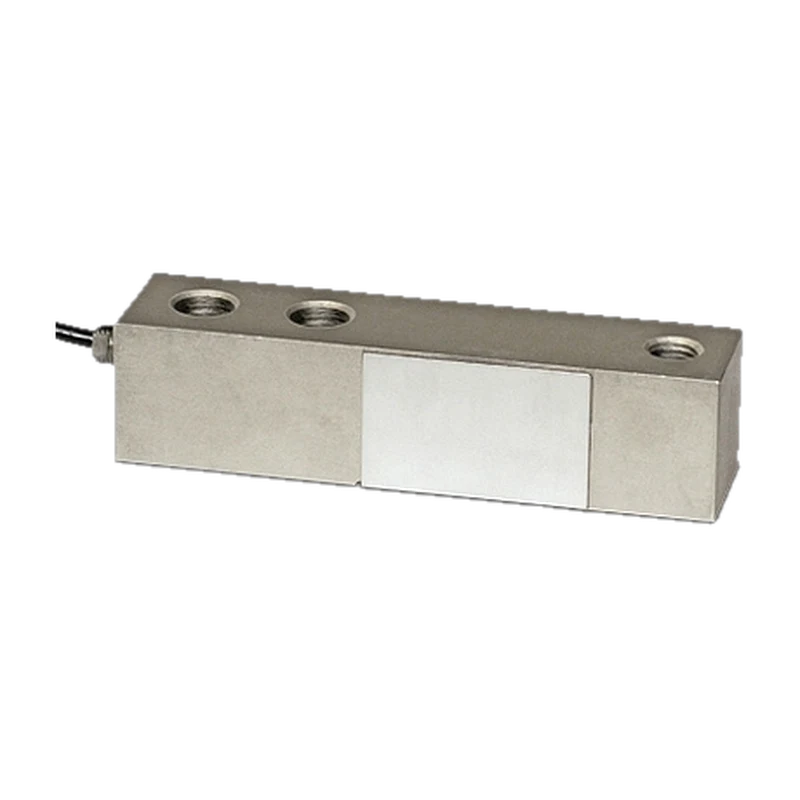 LaumasFTKL Shear Beam Load CellNickel-plated steel shear beam for 500–5,000 kg, OIML R60 C3 approved, IP67.View product →
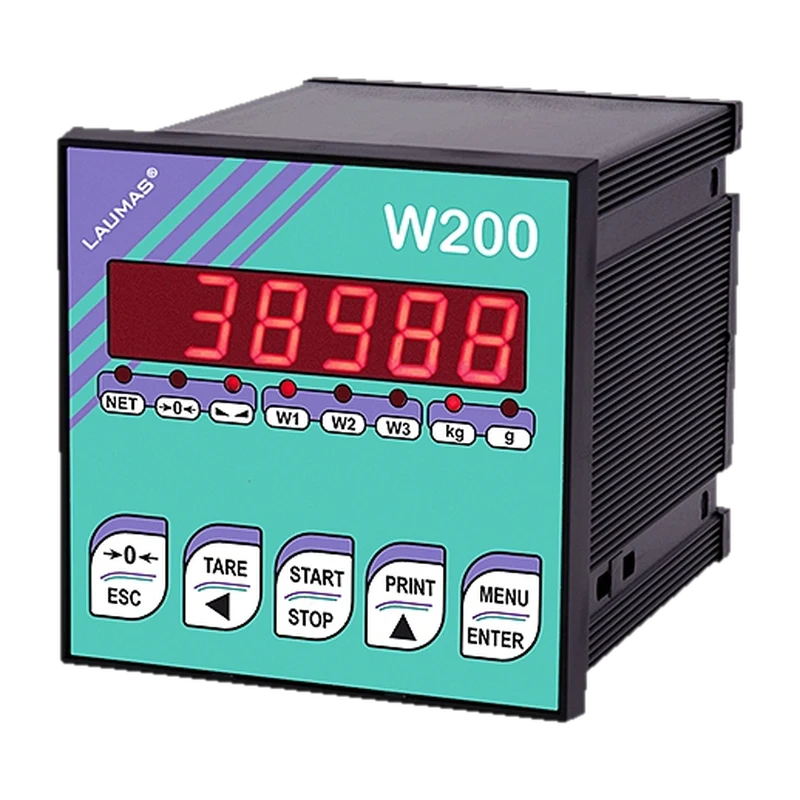 LaumasW200 Weight Indicator for BatchingBatching indicator for up to 14 products, OIML R76 and R61 approved, with optional PROFINET or EtherNet/IP.View product →
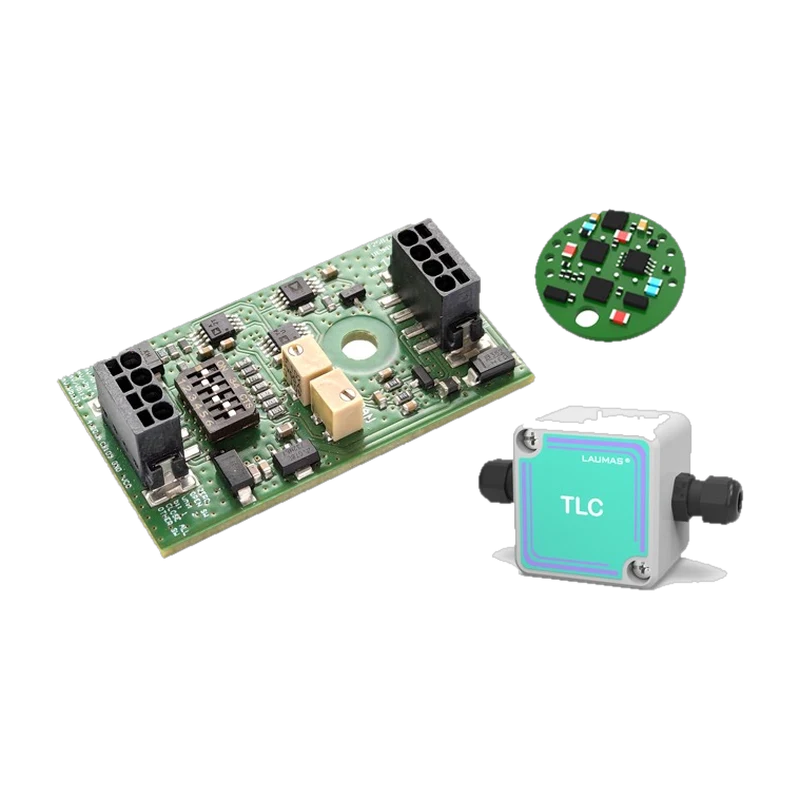 LaumasTLC Analog Weight TransmitterCompact board that converts the signal from up to four 350 Ω load cells to 4–20 mA or 0–10 V for the PLC.View product →
Erik Ahlqvist is Managing Director of SCN and has spent more than 20 years helping industrial companies choose the right electronics for demanding environments. He holds a BSc in Electronics from KTH Royal Institute of Technology, Stockholm.
LinkedIn profileFrequently asked questions
What does mV/V mean on a load cell?
It is the output at full load per volt of excitation. 2 mV/V with 10 V excitation gives 20 mV at rated load. The value is used when calibrating the electronics.
What does C3 mean?
Class C to OIML R60 with 3,000 verification intervals. The cell is suitable for a scale with up to 3,000 divisions.
How many load cells do I need?
Three give stable load sharing under round tanks and silos. Rectangular platforms often use four. Smaller platforms can manage with a single point cell.
How do I check a load cell?
Measure the bridge input and output resistance and the insulation to the housing, and check the zero signal with no load. Compare with the values in the datasheet.
Can I shorten the cable?
Not a 4-wire cable, because it is part of the cell’s calibration and temperature compensation. A 6-wire cable can be shortened, since the electronics measure the excitation at the cell.
Building or upgrading a scale? Ask us about load cells and electronics – you get an answer within 24 hours.
Ask us