




Industrial Ethernet protocols – PROFINET, EtherNet/IP, Modbus
The PLC speaks PROFINET, the energy meter Modbus and the servo drive EtherCAT. This guide explains what sets the most common industrial protocols apart, where they are used and when you need a gateway to make them talk to each other.
 By Erik Ahlqvist, Managing Director of SCN · Updated 24 October 2026 · 7 min read
- PROFINET – the Siemens world and the most common choice in Europe. Real-time Ethernet for I/O and drives.
- EtherNet/IP – Rockwell (Allen-Bradley) and Omron. Dominant in North America.
- Modbus TCP/RTU – simple and open. Found in almost everything from energy meters to drives.
- EtherCAT and CAN – EtherCAT for fast motion control, CANopen and J1939 in machines and vehicles.
- OPC UA – for data going up to SCADA, MES and the cloud, not for fast I/O.
- When two devices speak different protocols you need a gateway. A shared cable is not enough.
Why are there so many protocols?
From the 1980s, fieldbuses replaced the thick cable bundles between PLCs and sensors. Each major manufacturer pushed its own standard: Siemens backed PROFIBUS, Allen-Bradley backed DeviceNet and Bosch developed CAN for cars. With Ethernet came PROFINET, in practice the successor to PROFIBUS, and EtherNet/IP, which uses the same application layer (CIP) as DeviceNet.
The cables may look identical, but the devices speak different languages. Usually the PLC decides: if the customer chooses Siemens it will be PROFINET, if they choose Rockwell it will be EtherNet/IP. Anything else needs a translator.
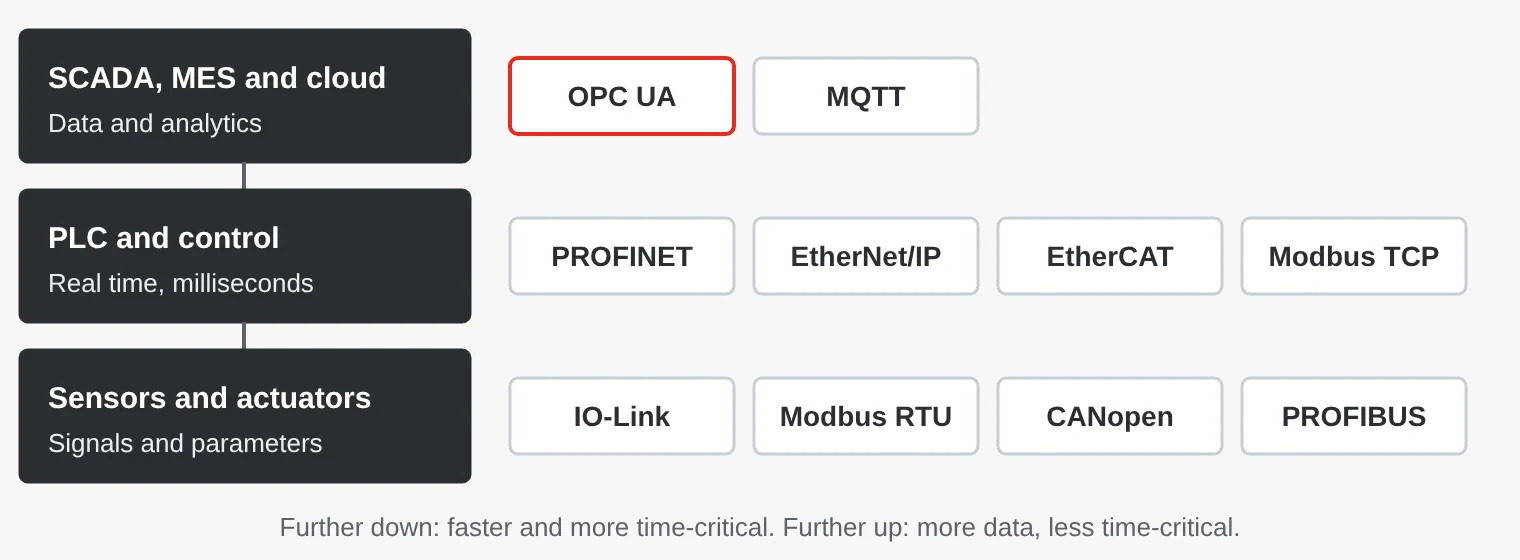
The most common protocols at a glance
| Protocol | Medium | Typical use | Common with |
|---|---|---|---|
| PROFINET | Ethernet | I/O, drives and robot cells. The IRT variant handles synchronised motion control. | Siemens and many others. Largest in Europe. |
| EtherNet/IP | Ethernet | I/O and drives. Based on CIP. | Rockwell (Allen-Bradley) and Omron. Largest in North America. |
| Modbus TCP | Ethernet | Simple monitoring and control: meters, drives, HMIs and SCADA. | Almost every manufacturer. Open since 1979. |
| Modbus RTU | RS-485 | Like Modbus TCP but serial, with up to 247 slaves on one bus. | Older and simpler equipment, energy metering. |
| EtherCAT | Ethernet | Fast motion control with short cycle times. | Beckhoff and many servo and I/O manufacturers. |
| CANopen, J1939 | CAN | Embedded systems, mobile machines and vehicles. | CANopen in machines, J1939 in trucks and off-highway machines. |
| PROFIBUS | RS-485, MBP | Existing plants (DP) and process industry (PA). | Siemens. Gradually replaced by PROFINET. |
| OPC UA | Ethernet | Data to SCADA, MES and the cloud, with built-in security. | Vendor-independent, IEC 62541. |
| IO-Link | Three-wire cable | Sensors and actuators with parameter setting and diagnostics. | All major sensor manufacturers, IEC 61131-9. |
PROFINET devices are identified by a device name and described in a GSDML file, EtherNet/IP devices in an EDS file. Modbus has no such description, so you need the manufacturer’s register map. EtherCAT processes frames on the fly in every slave and therefore needs dedicated hardware in the devices. IO-Link is not a network but a point-to-point connection of up to 20 metres between the sensor and an IO-Link master, which in turn sits on the fieldbus.
Which protocol is used where?
The choice depends on the industry, the region and the equipment already installed.
- Factories and machine builders – PROFINET or EtherNet/IP depending on the customer’s PLC. A machine sold in both Europe and the US often needs both. IO-Link is increasingly used for sensors.
- Vehicles and mobile machinery – CAN dominates. J1939 in trucks, tractors and construction machines, CANopen in lifts, forklifts and AGVs.
- Energy and power grids – Modbus in energy meters, inverters and battery storage. Substations use IEC 61850 and IEC 60870-5-104, which often have to be translated to Modbus or DNP3.
- Water, wastewater and buildings – Modbus RTU and TCP towards SCADA. OPC UA and MQTT when data has to go on to higher-level systems.
- Railways – dedicated train protocols such as MVB, WTB and TRDP from the IEC 61375 series, with gateways to Ethernet, serial and CAN.
- Medical technology and laboratories – CANopen and serial interfaces inside instruments and equipment.
- Semiconductors and electronics – SECS/GEM between production equipment and the factory host system.
When do you need a protocol gateway?
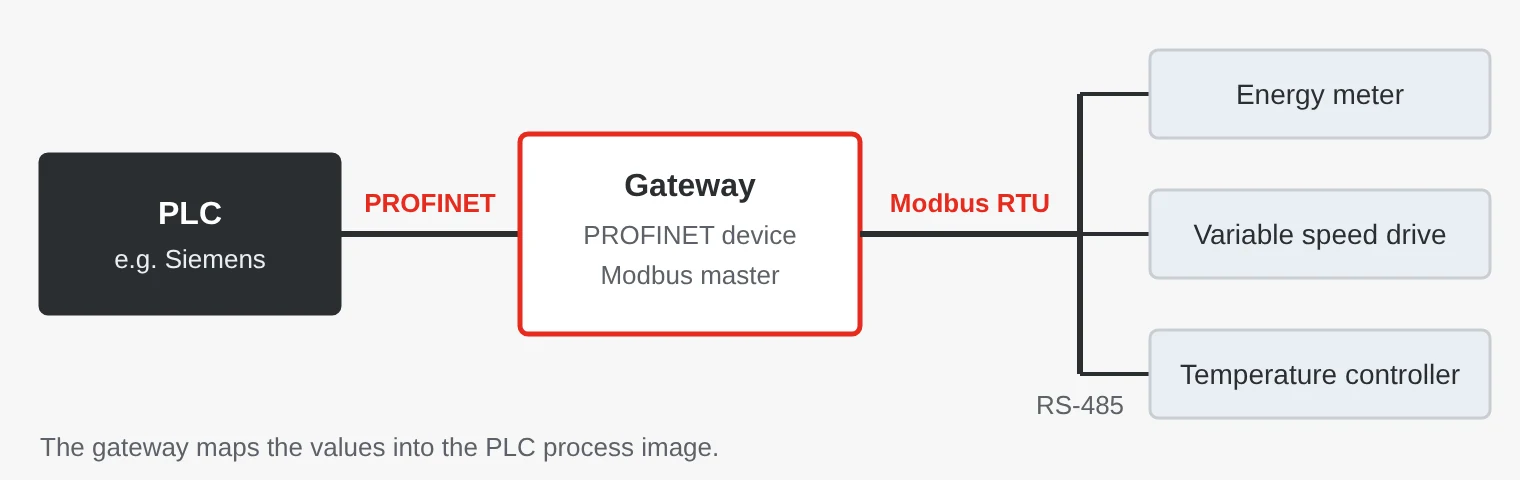
You need one when, for example, a Modbus meter has to be read by a Siemens PLC. The gateway is usually master or client on one side and slave or device on the other. It collects data cyclically and maps it into the PLC process image, so the program sees the values as ordinary inputs and outputs.
| If you need to … | … choose |
|---|---|
| Read Modbus equipment from a PROFINET PLC | Modbus to PROFINET gateway |
| Connect a CANopen or J1939 machine to a Rockwell PLC | CAN to EtherNet/IP gateway |
| Connect Modbus or Ethernet devices to an older PROFIBUS PLC | Gateway with PROFIBUS slave |
| Read Modbus RTU from SCADA over the network | Modbus RTU to TCP gateway |
| Send machine data to MES or the cloud | IIoT gateway with OPC UA or MQTT |
| Connect a PC to the CAN bus for testing and service | USB or PCIe CAN interface |
| Put RS-232 or RS-485 devices on Ethernet without changing protocol | Serial device server |
A gateway suits I/O data and measured values, but not synchronised motion control. There, the drives and the PLC should speak the same protocol.
Common mistakes
- Same connector does not mean same protocol. PROFINET and EtherNet/IP devices can share cables and switches, but they do not exchange any data with each other.
- No register map. Modbus only sends 16-bit registers. Without the manufacturer’s register map you cannot tell temperature from status, or which word of a 32-bit value comes first.
- Multicast floods the network. EtherNet/IP often sends I/O data as multicast. Without IGMP snooping in the switches, the traffic goes out on every port and can overload simple devices.
- Data area too small. How many bytes the gateway handles in each direction, and how fast it updates, limits how many devices you can connect.
- Wrong protocol for the job. OPC UA is excellent for sending data upwards, but it does not replace a real-time protocol for I/O and drives.
Gateways and interfaces from SCN
We supply protocol gateways from Moxa, HMS Networks (Ixxat), Weintek and Duagon, among others. They cover Modbus, PROFINET, EtherNet/IP, PROFIBUS, EtherCAT, CANopen, J1939 and OPC UA, as well as train protocols such as TRDP and MVB. The range also includes CAN interfaces for PCs and serial converters.
Examples from our range
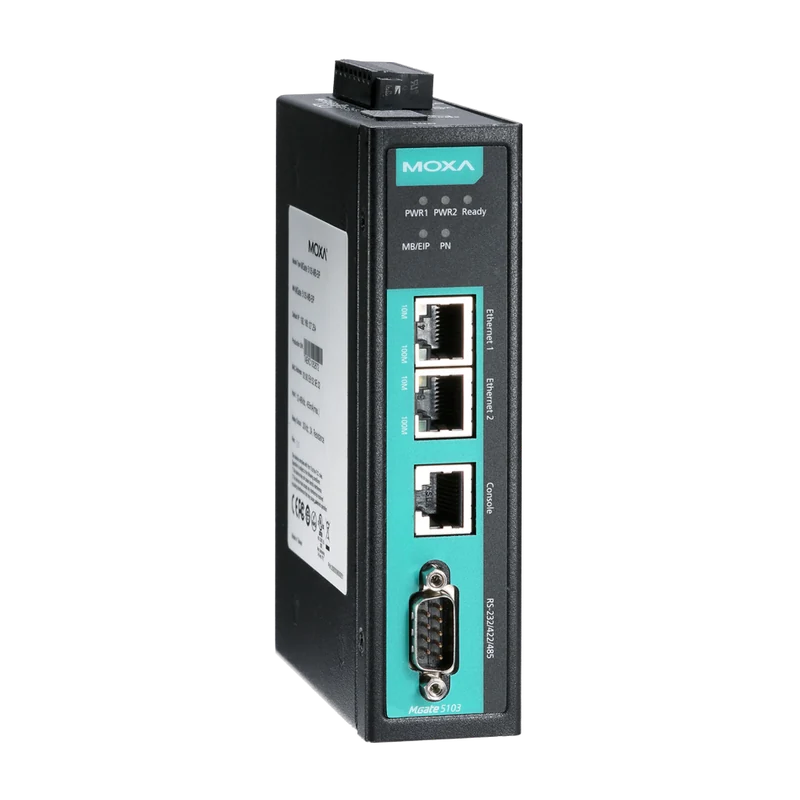 MoxaMGate 5103 Modbus to PROFINET GatewayConnects Modbus RTU/ASCII/TCP and EtherNet/IP devices to PROFINET as an IO device, with up to 512 bytes of input and output data.View product →
 HMS NetworksIxxat CAN@net NT 200Gateway and bridge between CAN and Ethernet with two CAN channels and MQTT for cloud connections.View product →
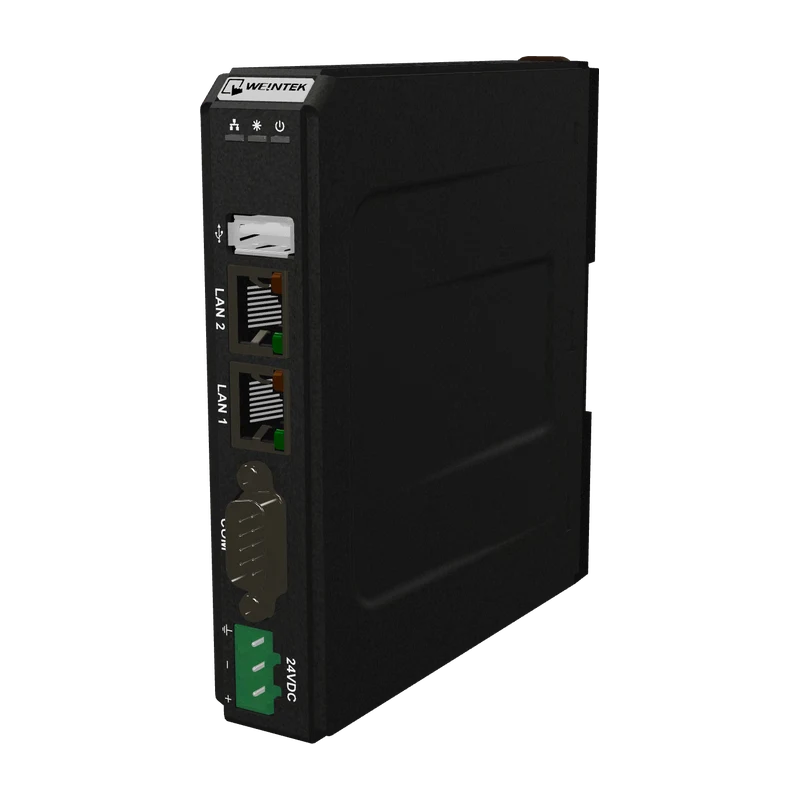 WeintekcMT-G01X IIoT gateway with OPC UA and MQTTIIoT gateway with OPC UA server and MQTT that links PLCs and machines to higher-level systems.View product →
Erik Ahlqvist is Managing Director of SCN and has spent more than 20 years helping industrial companies choose the right electronics for demanding environments. He holds a BSc in Electronics from KTH Royal Institute of Technology, Stockholm.
LinkedIn profileFrequently asked questions
What is the difference between PROFIBUS and PROFINET?
PROFIBUS is a serial fieldbus over RS-485 at up to 12 Mbit/s. PROFINET is based on Ethernet, offers more bandwidth and better diagnostics, and is what new plants are built with today. Both are managed by the same industry organisation, PI.
Are Modbus TCP and Modbus RTU the same thing?
They share the same data model and function codes but use different transport. RTU runs serially over RS-485 or RS-232, TCP over Ethernet. A simple Modbus gateway translates between them.
Can PROFINET and EtherNet/IP share the same network?
Yes, they can share cables and switches. But the devices do not exchange data directly. For that you need a gateway or a controller that speaks both protocols.
How does EtherCAT differ from PROFINET?
EtherCAT reads and writes data as the frame passes through each slave, giving very short cycle times for motion control. PROFINET is widely used for I/O and drives, with the IRT variant for demanding motion control.
Is OPC UA a fieldbus protocol?
No, OPC UA is mainly used to exchange data between machines and higher-level systems such as SCADA, MES and the cloud. A field-level variant, OPC UA FX, exists but is not yet widely used.
Need two systems to talk to each other? Describe the equipment and protocols to us – you get an answer within 24 hours.
Ask us