
iR analog I/O modules AI04, AM06 and AQ04
Analog I/O modules, ±10 V and ±20 mA, 4 to 6 channels
Analog I/O modules, ±10 V and ±20 mA, 4 to 6 channels
Distributed I/O for HMI and operator panel systems places inputs and outputs close to the machine and connects them over a fieldbus. SCN supplies distributed I/O from Weintek: the IR-ECAT EtherCAT slave, the IR-COP CANopen slave and the IR-ETN Modbus slave. Our engineers help you choose the right bus interface for your application.
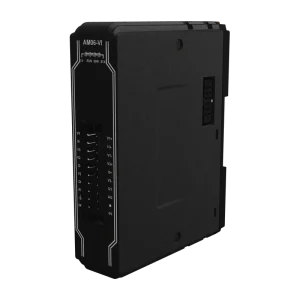
Analog I/O modules, ±10 V and ±20 mA, 4 to 6 channels
Analog I/O modules, ±10 V and ±20 mA, 4 to 6 channels
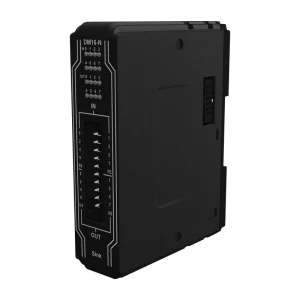
Digital I/O modules, 8 to 16 channels, relay option
Digital I/O modules, 8 to 16 channels, relay option

Remote I/O coupler, EtherCAT slave, 100 Mbps
Remote I/O coupler, EtherCAT slave, 100 Mbps
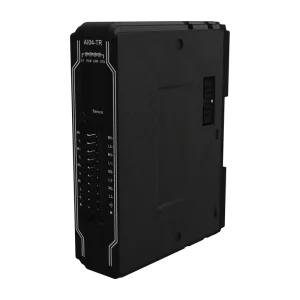
Temperature input module, 4 x RTD or thermocouple
Temperature input module, 4 x RTD or thermocouple

Remote I/O coupler, CANopen slave, 50 kbps–1 Mbps
Remote I/O coupler, CANopen slave, 50 kbps–1 Mbps

Remote I/O coupler for Modbus TCP/IP, 10/100 Mbps
Remote I/O coupler for Modbus TCP/IP, 10/100 Mbps
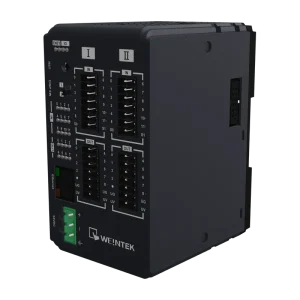
Modbus TCP coupler, 24 DI and 16 DO built in
Modbus TCP coupler, 24 DI and 16 DO built in
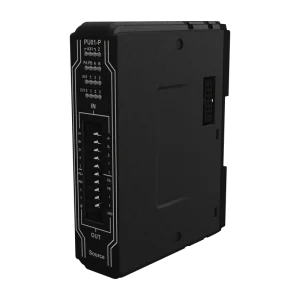
Pulse module, 1 axis, 2 MHz differential I/O
Pulse module, 1 axis, 2 MHz differential I/O
Distributed I/O, often called remote I/O, moves the inputs and outputs out of the central control cabinet and close to the sensors and actuators on the machine. A bus coupler collects the signals and sends them to the PLC, HMI or industrial PC over one fieldbus cable instead of dozens of individual wires. The result is less cabling, smaller cabinets and faster fault finding. SCN supplies the Weintek iR remote I/O system, where one coupler handles up to 1,024 I/O points and several nodes can be connected to the same master.
The range has three couplers: iR-ECAT for EtherCAT (100 Mbps), iR-COP for CANopen (50 kbps–1 Mbps) and iR-ETN for Modbus TCP/IP (10/100 Mbps). All run on 24 VDC, measure 27 x 109 x 81 mm and work from 0 to 55 °C. Pair them with a Weintek HMI panel, find protocol converters under gateways, or see all HMI and operator panels and PLC systems.
How to choose: start with the fieldbus your master already uses, count the digital and analog channels per machine section, and keep some spare channels for later changes.
Remote I/O is a set of input and output modules mounted near the machine and connected to the controller over a fieldbus instead of individual wires. A bus coupler such as the Weintek iR-ECAT, iR-COP or iR-ETN passes the signals between the I/O modules and the PLC, HMI or PC, which cuts cabling and makes the machine easier to extend.
Choose the fieldbus your master already supports. EtherCAT (iR-ECAT, 100 Mbps) suits fast machines and short cycle times, CANopen (iR-COP, up to 1 Mbps) is common in compact and mobile controllers, and Modbus TCP (iR-ETN) works with almost any PLC, HMI or SCADA system over standard Ethernet.
A Weintek iR coupler handles up to 1,024 I/O points per node, built from digital and analog I/O modules on a DIN rail. On larger machines you connect several nodes to the same master, for example one node per machine section, which keeps cable runs short and lets each section be tested on its own.
Most Weintek HMI panels read the iR modules over Modbus TCP through the iR-ETN coupler on a normal Ethernet port. Models with built-in CODESYS can also act as EtherCAT or CANopen master for the iR-ECAT and iR-COP. A small machine can then run its I/O directly from the HMI; check the interfaces of your panel model first.
Not sure which model you need?
Get help choosingFacts and advice that make the choice easier.
HMI and operator panels – how to chooseAll guides
If you have questions about our products the AI-assistant can help guide you to what you are searching for.


