
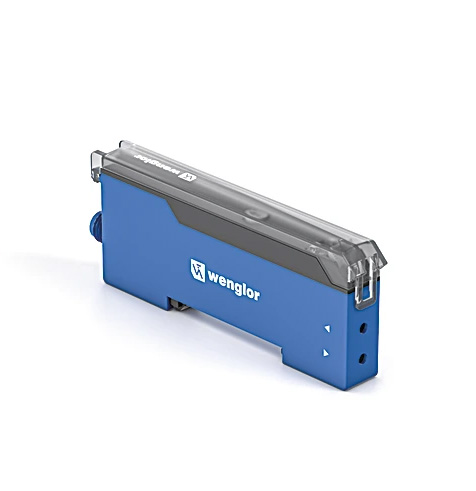














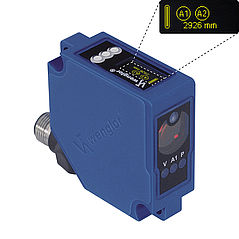
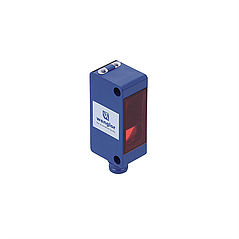
hese sensors work according to the energetic principle. Light is transmitted through one fiber-optic cable and received through the other. The amplifier can be adapted to a wide range of application requirements using the various plastic fiber-optic cables or fiber-optic cables with adapter no. 4. The switching point can be easily adjusted using the potentiometer. Both the fiber-optic cables and sensors can be mounted without the use of tools.
Features
Tool-free assembly
Can be adjusted using potentiometers
IO-Link 1.1
Functional flexibility (barrier, sensing device, reflex light barrier)
Our guides help you choose the right product.
IP ratings explained – IP65, IP67, IP68 and IP69KPhotoelectric sensor types – how to choose the right one| Sector | Factory Automation |
|---|---|
| Supply voltage | 10–30 VDC |
| Temperature range | -25°C ~ 60°C |
| IP Classification | IP50 |
| Material | Plastic |
| Mounting | DIN rail |
| Electrical connection | M8 connector |
| Communication Interface | IO-Link |
| Switching output | NO, PNP |
| Response time | 263 µs |
| Approvals | UL |
| Light type | Red light |
| Photocell type | Fiber-optic amplifier |
Tom Schönberg will happily help you navigate through our collection of products.
Tom Schönberg will happily help you navigate through our collection of products.
Stefan Rosenback will happily help you navigate through our collection of products.
Arturo Ramírez will happily help you navigate through our collection of products.

If you have questions about our products the AI-assistant can help guide you to what you are searching for.


