
samos PRO COMPACT Safety Controller
Safety controller, up to 116 safe inputs, 56 outputs
Safety controller, up to 116 safe inputs, 56 outputs
A safety PLC (safety controller) monitors several safety functions of a machine – emergency stops, safety doors, light curtains, two-hand controls and safe speed – in one programmable unit and brings the machine to a safe state when required. SCN supplies the samos PRO modular safety controller from Wieland Electric: samos PRO COMPACT with up to 116 safe inputs and 56 outputs, samos PRO MOTION for safe motion monitoring, I/O expansion modules with digital and analog inputs and gateways for CANopen, PROFIBUS-DP and EtherCAT. It is used in machine building and industrial automation as a flexible alternative to many separate safety relays. Our engineers help you choose the right modules and configuration for your application.
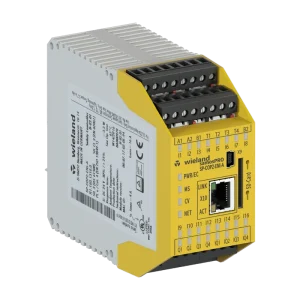
Safety controller, up to 116 safe inputs, 56 outputs
Safety controller, up to 116 safe inputs, 56 outputs
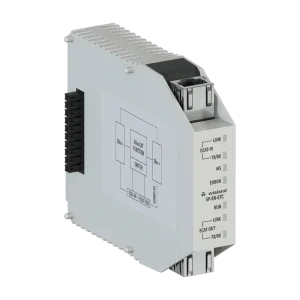
Fieldbus gateways, CANopen, PROFIBUS-DP, EtherCAT
Fieldbus gateways, CANopen, PROFIBUS-DP, EtherCAT
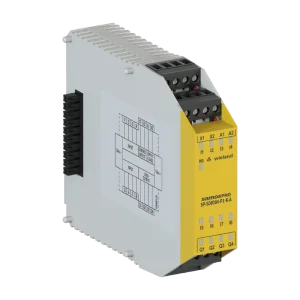
Safety I/O modules, digital and analog inputs
Safety I/O modules, digital and analog inputs
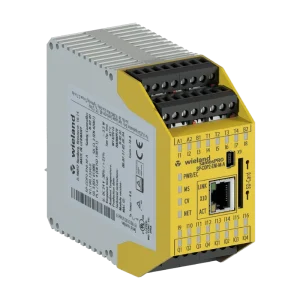
Safety controller, safe motion, 16 inputs, Ethernet
Safety controller, safe motion, 16 inputs, Ethernet
A safety PLC, or safety controller, monitors all the safety functions of a machine in one programmable unit: emergency stops, safety doors, light curtains, two-hand controls, enabling switches and safe speed. When a function is triggered, it brings the machine to a safe state. Compared with a cabinet full of separate safety relays, a safety PLC needs less wiring, gives clearer diagnostics and lets you change the safety logic in software instead of rewiring. SCN supplies the samos PRO system from Wieland Electric, configured in the licence-free samos PLAN6 software.
The range: samos PRO COMPACT, the modular base controller from 45 mm wide; samos PRO MOTION with safe speed, standstill and direction monitoring for up to two axes; I/O expansion modules with safe digital and analog inputs, up to 12 per controller; and gateway modules for CANopen, PROFIBUS-DP and EtherCAT. For one or two safety functions a safety relay is often enough. See also PLC systems and all control systems.
How to choose: list the safety functions and the required performance level from your risk assessment, count the safe inputs and outputs, decide whether you need safe motion, and choose the network to the main PLC.
A safety PLC is a programmable controller built and certified for safety functions, with redundant processing, continuous self-tests and outputs that switch off on any internal fault. It handles emergency stops, guards and light curtains up to PL e to EN ISO 13849-1 and SIL 3 to IEC 62061, as the Wieland samos PRO MOTION does with suitable sensors.
A safety PLC pays off when a machine has more than three or four safety functions, several safety zones or logic such as muting, operating modes or safe speed. No standard demands a safety PLC as such; the requirement comes from the risk assessment and the required PL. With one or two functions, a safety relay is usually simpler.
A safety PLC is certified for functional safety, uses redundant channels and diagnostics, and only runs certified function blocks, while a standard PLC runs the production logic without a safety rating. In most machines both work together: the samos PRO handles the safety functions and reports status to the main PLC via Ethernet or a gateway module.
The samos PRO is configured graphically in samos PLAN6 by connecting certified function blocks for emergency stop, door monitoring, muting or two-hand control, so no PLC programming language is needed. The software is licence-free, and the finished program is stored on a removable memory module, which makes it quick to swap in a replacement unit.
Not sure which model you need?
Get help choosing
If you have questions about our products the AI-assistant can help guide you to what you are searching for.


