




MIL-STD-810 and EN 50155 – a guide to rugged computers
A computer in an armoured vehicle, a train or a wheel loader faces shock, cold and a power supply full of dips and spikes. This guide explains what the standards cover and how to read a datasheet critically.
 By Erik Ahlqvist, Managing Director of SCN · Updated 24 October 2026 · 7 min read
- MIL-STD-810 – US defence test methods for the environment: temperature, shock, vibration, humidity, dust and more. There is no certification – ask which methods and levels were tested.
- MIL-STD-461 – EMC requirements for defence equipment: how much it interferes and how well it withstands interference.
- EN 50155 – electronics on rolling stock: temperature class, supply voltage, interruptions, vibration and EMC.
- EN 45545-2 – fire requirements for materials and components in trains.
- E-mark (UNECE R10) – EMC type approval for equipment in road vehicles. ISO 7637-2 and ISO 16750-2 describe the disturbances on vehicle power.
Why are vehicles and trains so hard on electronics?
In a vehicle everything vibrates all the time, and shocks come from potholes, points and sometimes gunfire. Temperatures swing from a cold winter start to a hot cab in the sun, with condensation in between. The power supply is far from clean: the voltage dips when the engine cranks, surges when large loads are disconnected and is cut every time the key is turned. The computer also sits close to radios, motors and inverters.
No single standard covers everything, so datasheets often list several:
| Standard | Area | Used in | What is tested |
|---|---|---|---|
| MIL-STD-810 | Environment | Defence, also civil rugged equipment | Temperature, shock, vibration, humidity, salt, dust, low pressure |
| MIL-STD-461 | EMC | Defence equipment | Conducted and radiated emissions, immunity |
| EN 50155 | Rail | Electronics on board trains | Temperature, supply, interruptions, vibration (EN 61373), EMC (EN 50121-3-2) |
| EN 45545-2 | Fire | Materials in trains | Flammability, smoke and toxicity |
| UNECE R10 | EMC | Road vehicles and their equipment | Emissions, immunity and transients, gives the E-mark |
| ISO 7637-2 and ISO 16750-2 | Vehicle power | Road vehicles | Transients, cranking dip, load dump, reverse polarity |
MIL-STD-810 and MIL-STD-461 – the defence standards
MIL-STD-810 is the US Department of Defense standard for environmental testing. The current version is MIL-STD-810H from 2019, with a change notice from 2022. It contains test methods such as 501 and 502 for high and low temperature, 503 for temperature shock, 507 for humidity, 509 for salt fog, 510 for sand and dust, 514 for vibration and 516 for mechanical shock.
The core of MIL-STD-810 is tailoring: the test should be adapted to how the product is actually used. So there is no fixed level and no authority that certifies. “MIL-STD-810” in a datasheet says little on its own. What matters is which methods, procedures and levels were tested.
MIL-STD-461 covers electromagnetic compatibility. The tests are grouped into conducted emissions (CE), radiated emissions (RE), conducted susceptibility (CS) and radiated susceptibility (RS), for example CE102, CS114, RE102 and RS103. Requirements differ between aircraft, ships and ground vehicles. Version G from 2015 applied for many years, and MIL-STD-461H was published in April 2026. Check which version and which tests the product has passed.
Rail: EN 50155 and EN 45545-2
EN 50155 is the core standard for electronics on rolling stock. It sorts equipment into temperature classes. OT3, −25 to +70 °C, is the default. OT4 extends down to −40 °C, and OT5 and OT6 up to +85 °C. Power comes from the train battery, often 24, 72 or 110 V DC, and the computer must handle large variations. Interruption classes state how long it must keep running without power: S1 no interruption, S2 10 ms and S3 20 ms.
Vibration and shock are tested to EN 61373, where the category depends on where the equipment sits: in the car body, on the bogie or on the axle. EMC is tested to EN 50121-3-2.
EN 45545-2 deals with fire protection. Plastics, cables and circuit boards must meet requirements for flammability, smoke and toxic gases. The requirements tighten over three hazard levels, HL1 to HL3, depending on the type of train and operation, such as long tunnels. Ask for documentation for the level your project requires.
Road vehicles: E-mark and vehicle power
Electronics fitted to cars, buses and trucks normally has to be E-marked under UNECE Regulation No. 10 (R10), which covers EMC. The mark consists of an E, a number for the country that granted approval, for example E1 for Germany, and an approval number. The requirement applies to equipment with functions that can affect, for example, vehicle control, safety or the data bus. Other aftermarket equipment can be CE-marked instead.
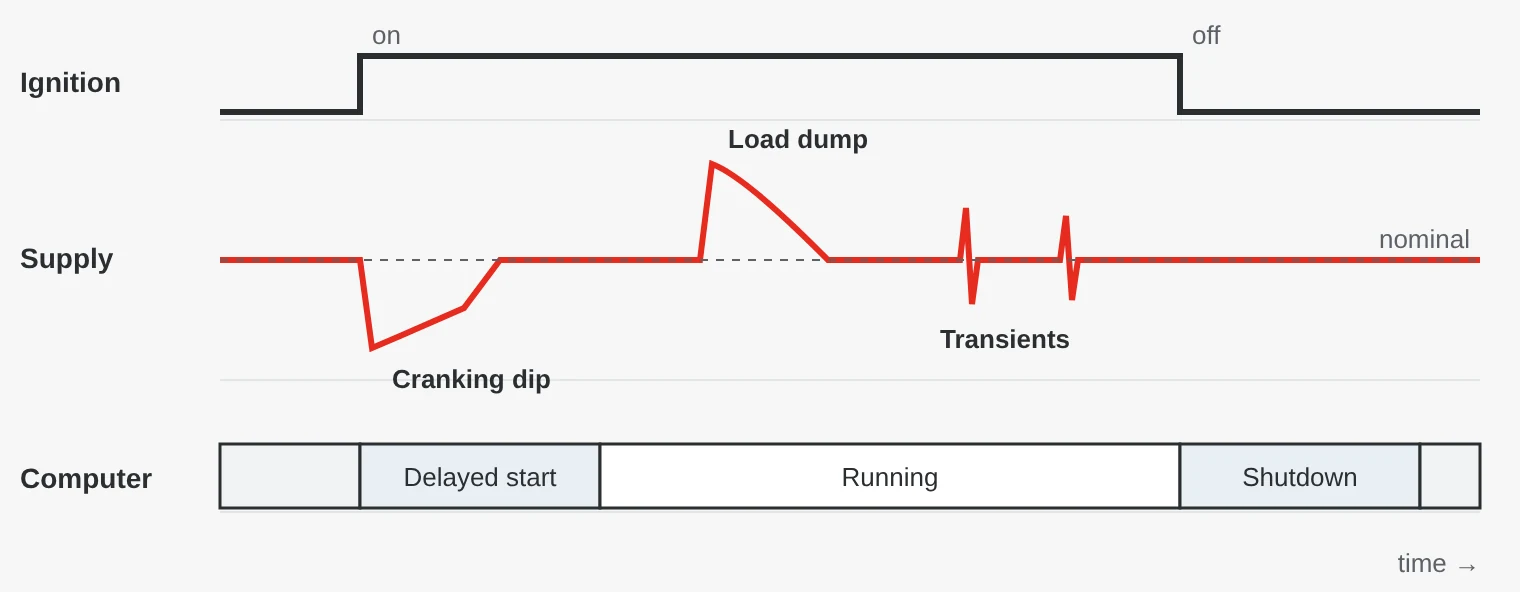
Vehicle power is described in two standards. ISO 7637-2 covers fast transients on the supply, for example when an inductive load is disconnected. ISO 16750-2 covers slower events: the voltage dip during cranking, load dump when the alternator suddenly loses its load, overvoltage and reverse polarity. A vehicle computer therefore needs a wide input range, such as 9–36 V DC, and ignition control. It starts a while after the ignition is switched on, so the cranking dip does not affect it, and shuts down the operating system in a controlled way when the ignition is switched off.
How to read the datasheet critically
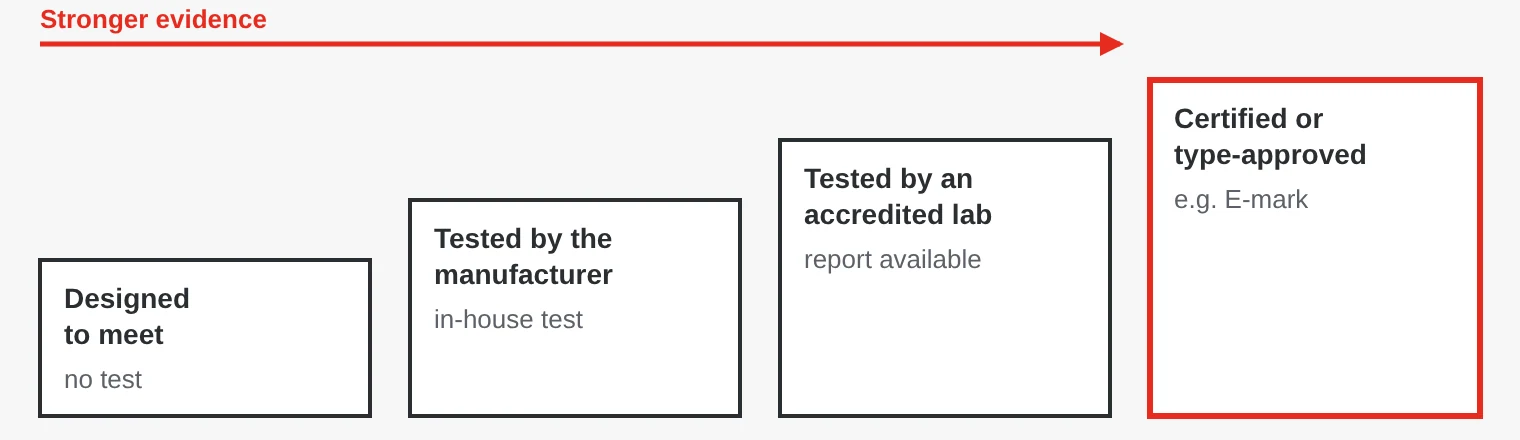
The wording reveals a lot. “Designed to meet” means the product is designed for the requirements but not necessarily tested. “Compliant” can mean anything from an in-house test to a full report. A type approval such as the E-mark has a certificate number that can be checked.
- Just “MIL-STD-810”. Ask for the methods, procedures and levels, and whether there is a test report.
- The wrong version. A test to MIL-STD-810F or MIL-STD-461E is not automatically equivalent to today’s versions.
- The tested configuration is not yours. The temperature range may apply to a certain processor, without radio modules or with a certain drive. Compare with the configuration you order.
- Forgetting the power supply. A computer without ignition control and without margin for the cranking dip will reboot or corrupt its drive in the field.
- Connectors count too. Vibration loosens ordinary RJ45 and USB connectors. Vehicles often use M12, and defence uses MIL-DTL-38999.
Where are rugged computers needed?
- Defence – computers in armoured vehicles, consoles in command centres and on ships, rugged networks and drone ground stations.
- Rail – passenger information, video surveillance, diagnostics and train-to-ground communication.
- Buses and trucks – fleet management, cameras and ticketing.
- Mobile machines – driver terminals in forestry machines, mining vehicles, forklifts and farm machinery.
- Emergency vehicles – computers and tablets in ambulances and fire engines.
Rugged computers from SCN
We supply vehicle and train computers from brands such as Moxa, Axiomtek, AAEON and Duagon, rugged panel PCs and tablets from Winmate, and military networking and VPX boards from Enercon and Aitech. The product pages list the standards stated by each manufacturer.
Examples from our range
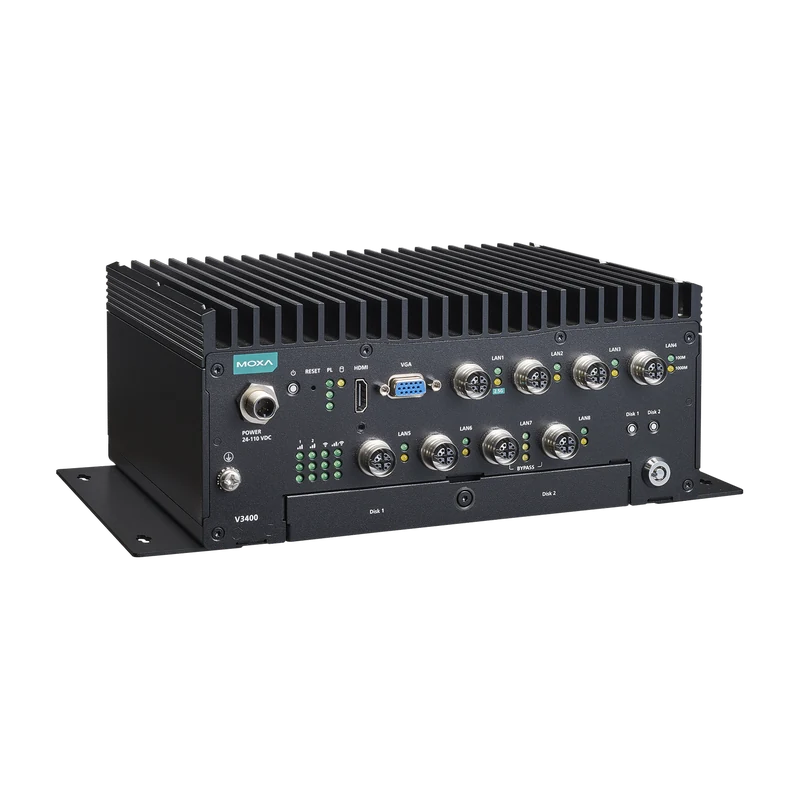 MoxaV3400 EN 50155 Intel Core Train ComputerEN 50155 train computer with isolated 24–110 V DC input, running from −40 to 70 °C even with radio modules.View product →
 AAEONVPC-5640SFanless in-vehicle computer with E-mark (ECE R10), 9–36 V DC input and two CAN interfaces.View product →
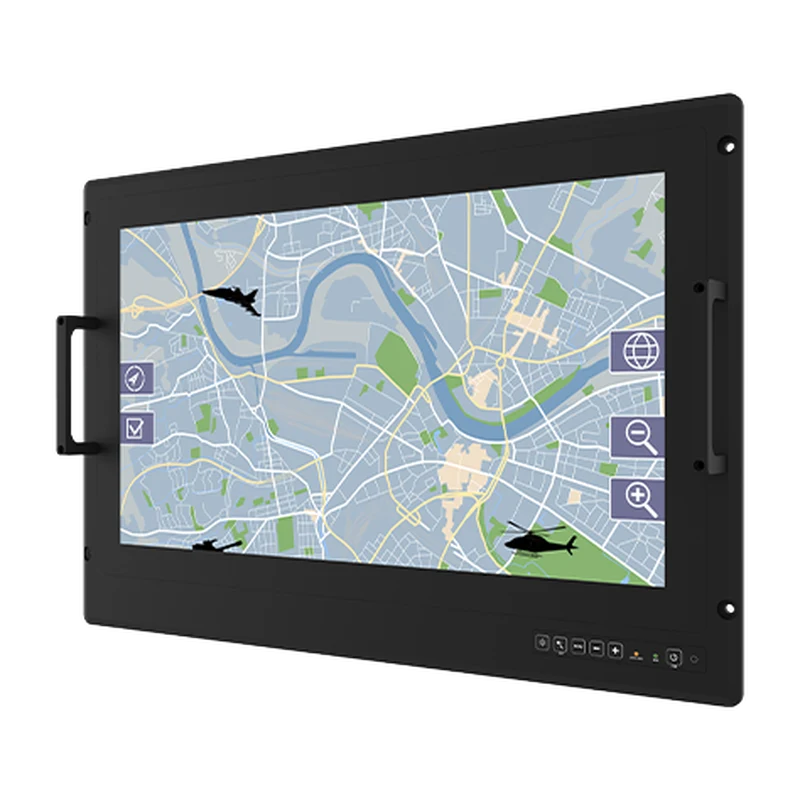 WinmateW24IAD3S-MLA2FP 24" Defence Rack Panel PCPanel PC for defence consoles with MIL-STD-810H and MIL-STD-461G as standard.View product →
Erik Ahlqvist is Managing Director of SCN and has spent more than 20 years helping industrial companies choose the right electronics for demanding environments. He holds a BSc in Electronics from KTH Royal Institute of Technology, Stockholm.
LinkedIn profileFrequently asked questions
What does MIL-STD-810 mean?
It is the US military standard for environmental testing. It describes how equipment is tested against temperature, humidity, shock, vibration and more.
Is MIL-STD-810 a certification?
No. No authority certifies to MIL-STD-810. The manufacturer chooses methods and levels, so ask for the test report.
What is the difference between MIL-STD-810G and 810H?
810H from 2019 replaced 810G from 2008 with revised test methods. A test to 810G is not automatically equivalent, so compare methods and levels.
What is EN 50155?
A European standard for electronics on rolling stock. It sets requirements for temperature, supply voltage, interruptions, vibration and EMC.
What does the E-mark mean?
That the equipment is type-approved for EMC under UNECE Regulation No. 10. The number after the E identifies the approving country.
More guides
All guides →Need to know exactly what a computer has been tested for? Ask us – you get an answer within 24 hours.
Ask us